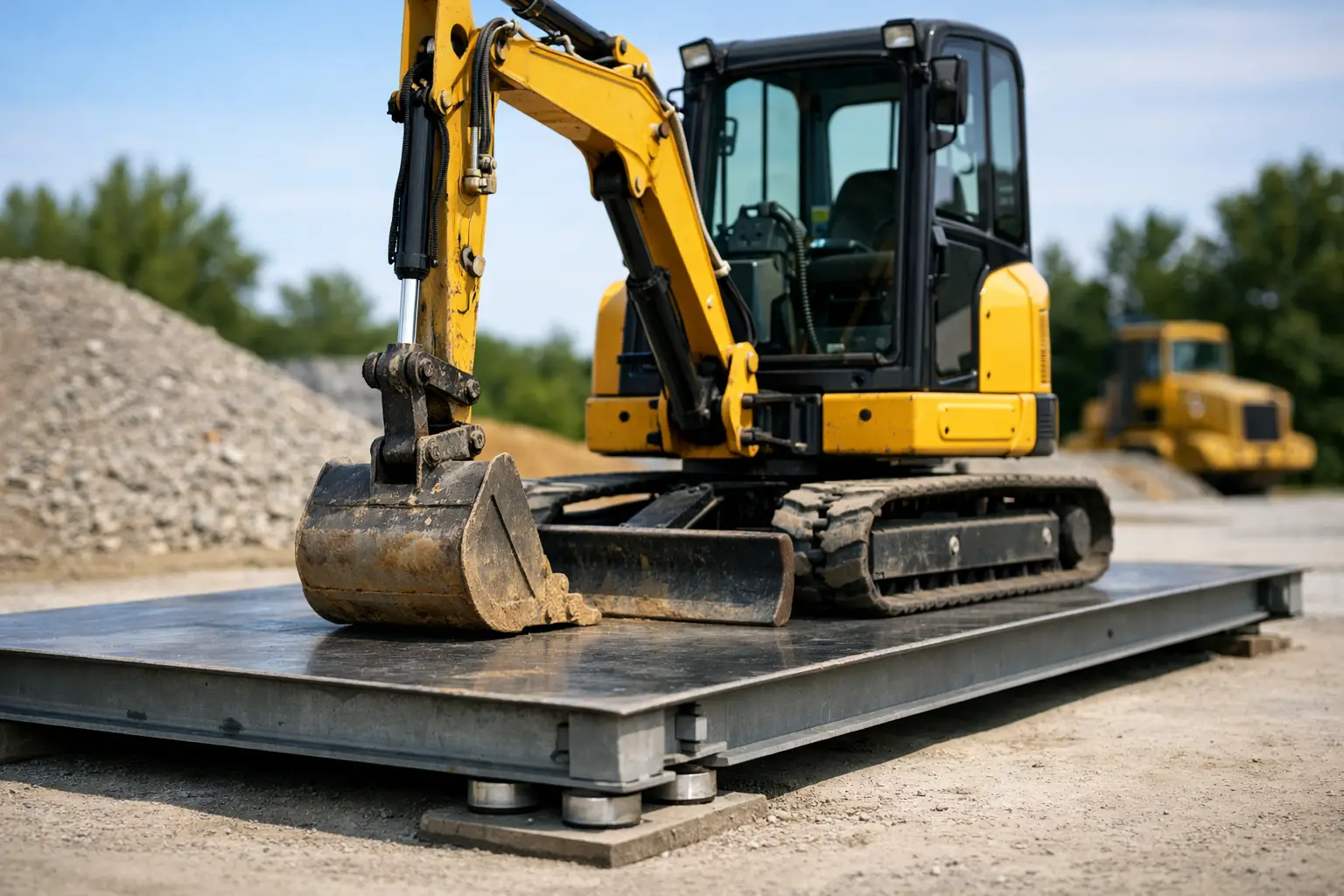
A machine that fits through a backyard gate can still be too heavy for the trailer, too light for the attachment, or too large for the ground conditions. Mini excavator operating weight is the number that helps contractors prevent those mismatches before the machine reaches the jobsite.
For Florida contractors, that number affects more than a purchase decision. It influences how the excavator loads onto a trailer, performs in soft ground, handles trench spoils, and holds its position while working near utilities, structures, and finished landscaping. It is one of the first specifications to compare, but it should never be considered by itself.
What Mini Excavator Operating Weight Means
Operating weight is the working weight of an excavator in its specified standard configuration. It generally accounts for the machine with its installed equipment and operating fluids, but the exact configuration can vary by manufacturer and model. A cab versus canopy, rubber tracks versus steel tracks, an added counterweight, or certain factory options can change the final number.
That is why a buyer should treat published operating weight as a starting point for machine selection, not as a substitute for confirming the exact unit configuration. Before scheduling delivery or selecting a trailer, verify the machine’s specification sheet, installed attachments, and any added accessories.
In the JCB compact excavator range, operating weights span from the 3,649-pound 18Z-1 to the 21,385-pound 100C-2. That is a wide range of machine, and it reflects a wide range of work. A light compact excavator may be the right fit for residential drainage or tight-access landscaping, while a larger model can bring the reach, digging force, lift capability, and production needed for demanding utility or site-development work.
Why Operating Weight Matters on the Job
Weight directly contributes to stability. As an excavator digs, swings a loaded bucket, lifts pipe, or works with a hydraulic breaker, the undercarriage and counterweight must resist the forces created by that work. A heavier machine often has a stronger footing for larger buckets, longer reach, and heavier attachments.
That does not mean heavier is automatically better. Extra weight can make transport more complicated, increase ground disturbance, and limit access to work areas with weak soil, pavers, septic fields, or restrictive bridge and trailer capacity. The best choice is the machine that carries enough weight for the work without bringing more machine than the site can support.
Operating weight also affects the feel of the machine from the operator’s seat. A properly matched excavator tends to track with more confidence, stay composed while swinging material, and handle repetitive digging cycles without requiring the operator to constantly compensate for instability. On production work, that control matters. It reduces wasted motion and helps crews keep the trench, grade, or loading area moving.
Stability is more than the machine weight
A machine’s operating weight is only one part of stability. Boom position, arm length, bucket load, swing direction, track stance, slope, ground conditions, and attachment weight all matter. Lifting a pipe close to the machine is different from lifting the same load at maximum reach over the side.
Operators should work within the published lift chart and follow safe operating procedures for the specific machine. If material handling is a regular task, compare lift capacity at the distances and heights used on your jobs rather than relying on operating weight alone.
Transport Starts With the Real Combined Weight
Trailer planning is where operating weight becomes a hard number. The excavator is not the only weight on the road. Add the bucket, quick coupler, hydraulic attachment, trailer, ramps, chains, fuel, tools, and any additional equipment being hauled. Then compare that total with the trailer’s payload rating, the tow vehicle’s ratings, and applicable requirements for safe, legal transport.
A compact excavator that looks towable at first glance can push a setup beyond its practical capacity once a breaker, auger drive, or tilt bucket is installed. This is especially relevant for owner-operators who want one truck-and-trailer combination to cover several machines.
Smaller excavators can offer a real advantage where fast mobilization is part of the business model. They can be easier to move between residential jobs, drainage repairs, fence-line work, and small utility projects. Larger compact machines may require more transport planning, but their added digging depth, breakout force, and lift capability can eliminate extra machine time on heavier work.
Do not choose solely around the truck you own today, either. A trailer-friendly machine that is undersized for your recurring workload can cost more in labor hours, rental support, and missed production than a properly sized machine with a planned transport setup.
Ground Pressure and Florida Site Conditions
Operating weight matters to the ground, but it is not the same as ground pressure. Ground pressure is influenced by machine weight and the area of track contacting the surface. A heavier excavator on wider tracks can distribute its weight differently than a lighter machine on narrower tracks.
On sandy lots, wet ground, retention areas, or recently disturbed soil, that difference affects flotation and rutting. Contractors working around finished lawns, irrigation, and residential hardscapes must also consider how the machine will enter, turn, and exit the site. Rubber tracks can help protect sensitive surfaces, but they do not eliminate the impact of machine weight or poor operating practices.
When soft-ground performance is a concern, look at the full undercarriage setup. Track width, track length, machine balance, and travel route all deserve attention. In some cases, ground mats, a different access path, or a lighter machine is the practical answer. In others, the project requires the production and stability of a heavier excavator, and the crew needs to prepare the site accordingly.
Match Weight to the Work, Not Just the Access Point
A compact footprint gets a machine onto the site. Operating weight helps determine whether it can perform once it gets there. Start by looking at the jobs that produce the most revenue or consume the most labor hours. Then compare the machine against the actual work: trench depth, material type, loading height, attachment use, lifting needs, daily operating hours, and travel between tasks.
For light residential excavation, irrigation, drainage, and landscape preparation, a smaller zero-tailswing excavator may make sense when access is restricted and turf impact must be controlled. For utility trenches, retaining-wall preparation, land clearing, demolition support, and recurring truck loading, more operating weight may be justified by the added stability and productive capacity.
Tailswing configuration also belongs in the decision. A zero-tailswing machine can be a strong choice near walls, traffic lanes, fences, and other obstacles. Conventional-tailswing models can offer different balance characteristics and may be well suited to sites where swing clearance is not the limiting factor. Neither design is universally better. The work envelope decides.
Attachments can change the answer
An excavator purchased mainly for bucket work may need a different operating-weight range than one expected to run a breaker, grapple, auger, compaction wheel, or tiltrotator. Attachments add weight, alter the center of gravity, and place different demands on hydraulic performance and stability.
Ask whether the attachment will be used occasionally or every day. If a heavy hydraulic attachment is central to your operation, select the excavator around that workload. Buying a machine at the bottom edge of the requirement can create limits that show up as slow cycle times, reduced lift confidence, and premature wear.
Compare Specifications as a Working Package
A productive purchase decision connects operating weight with digging depth, maximum dump height, horsepower, hydraulic flow, breakout force, tail configuration, and transport requirements. Looking at one headline number can lead to an expensive compromise.
For example, two excavators may sit near the same weight class, yet one may better fit your work because of its reach, cab configuration, hydraulic capability, or ability to operate safely in confined spaces. Likewise, an electric excavator may offer a strong fit for indoor, low-emission, or noise-sensitive work, but charging access and duty cycle need to be planned around the job.
BRIGGS | JCB can help contractors compare those specifications against the conditions they face in the field, whether the priority is tight-access maneuverability, dependable trench production, or the ability to move a machine efficiently between Jacksonville-area jobs.
Before requesting a quote, write down the weight of the attachments you expect to use, the trailer and tow vehicle available, the narrowest jobsite access point, and the deepest or heaviest recurring task. Those details turn operating weight from a catalog figure into a practical buying tool. The right excavator should arrive ready to work, fit the transport plan, and give your crew the stability to keep producing all day.