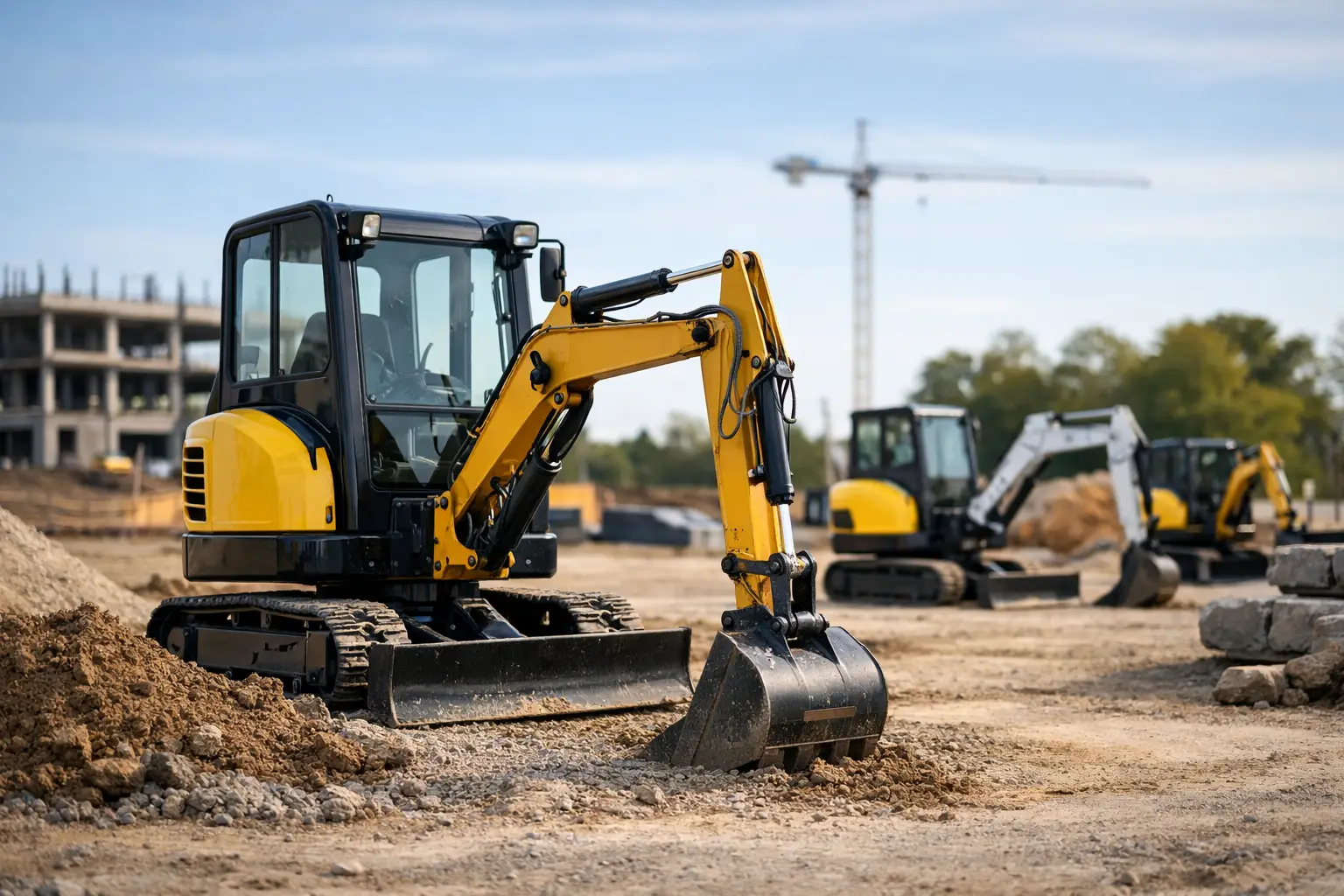
A mini excavator that is too large for the access route wastes time before the first bucket hits the ground. One that is too small for the trench depth, lift requirement, or attachment work can slow the whole crew down. When comparing mini excavators for sale, start with the work you need done every day, then match the machine’s size, reach, tailswing, and transport requirements to that reality.
For contractors across Northeast Florida, the right compact excavator is rarely just the lowest-priced option. It is the machine that can get through the gate, work productively in the available footprint, load out efficiently, and stay useful as the next job changes.
How to Compare Mini Excavators for Sale
Operating weight is the first practical filter. A lighter machine is easier to tow and can be the right call for residential service work, small utility repairs, landscaping, and jobs where access is limited. A heavier compact excavator brings more digging force, lift capacity, stability, and reach, which matters when production trenching, demolition, drainage installation, or material handling is on the schedule.
The JCB compact excavator range available through BRIGGS | JCB runs from the 3,649-pound 18Z-1 to the 21,385-pound 100C-2. That spread covers a very different set of jobs. The goal is not to buy the biggest machine possible. It is to select the smallest machine that can consistently handle your heaviest regular workload without forcing the operator to work at the edge of its capacity.
Before asking for a quote, define four jobsite facts: your required digging depth, the narrowest point of access, the material you will handle, and the trailer or truck available for transport. Those answers quickly narrow a broad equipment search to a workable machine class.
Start With Dig Depth, Reach, and Dump Height
Digging depth is a core number for utility and drainage work, but it should not be viewed alone. A machine may technically reach the required depth while still leaving the operator short on working radius or side reach. For trenching along foundations, road edges, fences, and established utilities, reach affects how often the machine needs to be repositioned.
Dump height matters when spoil must go directly into a dump truck, roll-off container, or high-sided trailer. If the excavator cannot clear the sidewall cleanly, the crew loses time managing piles or bringing in extra handling equipment. Consider the bucket and material, too. Wet clay, broken concrete, and dense fill do not behave like loose topsoil, and heavier loads change the lift calculation.
Ask for the working specifications that apply to your intended bucket and attachment setup. A machine’s maximum figures are useful for comparison, but normal production conditions are what determine whether it will keep pace on site.
Match Tailswing to the Work Zone
Tailswing configuration can make or break productivity in tight areas. Zero-tailswing excavators are built to work close to walls, traffic lanes, buildings, landscaping, and other fixed obstacles. With minimal or no counterweight extending outside the track width during rotation, they reduce the space needed to swing and help lower the risk of striking surrounding objects.
That makes a zero-tailswing model a strong fit for residential construction, urban utility work, pool excavation, interior demolition, and roadside projects. The trade-off is that every model has its own balance of compact dimensions, lift performance, and stability. Do not assume all zero-tailswing machines perform the same simply because they share the label.
Conventional-tailswing configurations can be a practical choice when the jobsite offers enough room and the work calls for a stable, productive digging platform. On open site-development, agricultural, or drainage work, swing clearance may be less important than capacity and reach. The right answer depends on where the machine spends most of its hours, not the occasional job that looks good in a brochure.
Choose a Size Class That Supports Your Crew
A compact excavator should fit the crew’s operating model as well as the job. Owner-operators may prioritize towability and versatility because one machine has to cover multiple types of work. Fleet managers may prioritize a consistent size class, controls, attachment setup, and service plan across several crews.
Smaller machines are often the compact heroes on restricted sites. They can enter backyards, move through narrow access points, and work where a larger excavator would require hand labor or site disruption. Their lower transport weight can also simplify mobilization between short-duration jobs.
Mid-size compact excavators generally offer a productive balance for contractors who trench, grade, load material, and use hydraulic attachments regularly. They provide more stable lifting and deeper digging capability without moving into a full-size excavator footprint. For many utility, landscape, and site-prep crews, this is where a machine earns its keep across the widest range of jobs.
Larger compact excavators are built for crews that need greater horsepower, digging performance, lift capacity, and production output while still benefiting from a compact footprint. These machines can be the better investment when the work regularly includes deeper utility installation, heavier pipe and structure handling, substantial grading, or demolition. They require more attention to trailer capacity, truck ratings, permits, and access planning.
Do Not Overlook Transport Weight
A mini excavator purchase has to work from the yard to the jobsite. Confirm the operating weight with the bucket, coupler, attachments, fuel, and any trailer equipment included in the move. Then compare that total with your trailer’s payload rating, axle ratings, tie-down points, truck towing capacity, and applicable Florida transport requirements.
Buying a machine that requires different transport equipment can be the right operational decision, but that cost belongs in the purchase plan. The same applies to trailer length, loading angle, and the room needed to secure attachments safely. A machine that mobilizes easily can protect margins on smaller jobs where transport time is a large share of the day.
New, Used, and Electric Excavator Options
New equipment gives buyers a clean starting point on condition, specifications, warranty coverage, and technology. It is often the right move for contractors building a standard fleet or adding a machine expected to accumulate heavy annual hours. New units also allow you to choose the configuration that best matches your attachment and application needs.
Used mini excavators can make sense for a growing company, a seasonal operation, or a buyer adding capacity for a defined workload. The value depends on more than meter hours. Inspect undercarriage condition, hydraulic response, pins and bushings, track wear, service history, leaks, controls, and attachment coupler condition. A lower upfront cost can disappear quickly if the machine needs immediate repairs or creates avoidable downtime.
Electric excavators deserve consideration for indoor work, enclosed spaces, noise-sensitive areas, and sites with emissions restrictions. They offer a practical way to handle excavation and material work where diesel operation is limited. The decision comes down to runtime, charging access, work cycle, job duration, and the type of work performed between charging periods. For a crew that works long shifts far from reliable power, a diesel machine may remain the more practical choice.
Build the Machine Around the Work
The bucket is only the beginning. A compact excavator can support trenching, grading, demolition, land clearing, material handling, and specialty work when it is matched with the right coupler and hydraulic attachments. A hydraulic thumb, breaker, auger, grading bucket, or compaction attachment can turn one machine into a more capable tool carrier.
Attachment planning should happen before the purchase, not months after delivery. Confirm auxiliary hydraulic flow, pressure, coupler compatibility, lift requirements, and whether the operator needs additional guarding or configuration changes. A breaker may be a smart addition for concrete removal, but it brings different hydraulic and wear demands than a trenching bucket. An auger can speed up fence, foundation, and landscaping work, but only if the excavator has the hydraulic capacity and stability for the ground conditions.
Operator comfort also belongs in the buying decision. A comfortable operator is more likely to work accurately through a full shift, especially during repetitive trenching or precision grading. Look at visibility, control layout, seat support, cab or canopy configuration, climate control needs, and safe access to the operator station. Features that reduce fatigue are field-performance features, not extras.
Make the Quote a Jobsite Conversation
A useful equipment quote should reflect more than a model number. Provide the dealer with your typical applications, maximum dig depth, material type, restricted access points, attachment plans, transport setup, and expected annual usage. That gives the conversation enough detail to identify a machine configuration that supports real production rather than a generic specification comparison.
Financing can also affect the right buying decision. A payment structure that preserves working capital may allow a contractor to purchase the attachment package, trailer capacity, or supporting equipment needed to put the excavator to work immediately. Evaluate the full operating picture: purchase cost, fuel or charging, maintenance, transport, attachments, insurance, and expected utilization.
The best compact excavator is the one your crew can load safely, operate confidently, and keep productive from the first trench to the final cleanup. Bring the details of your next demanding job to the equipment discussion, and let that job determine the machine.