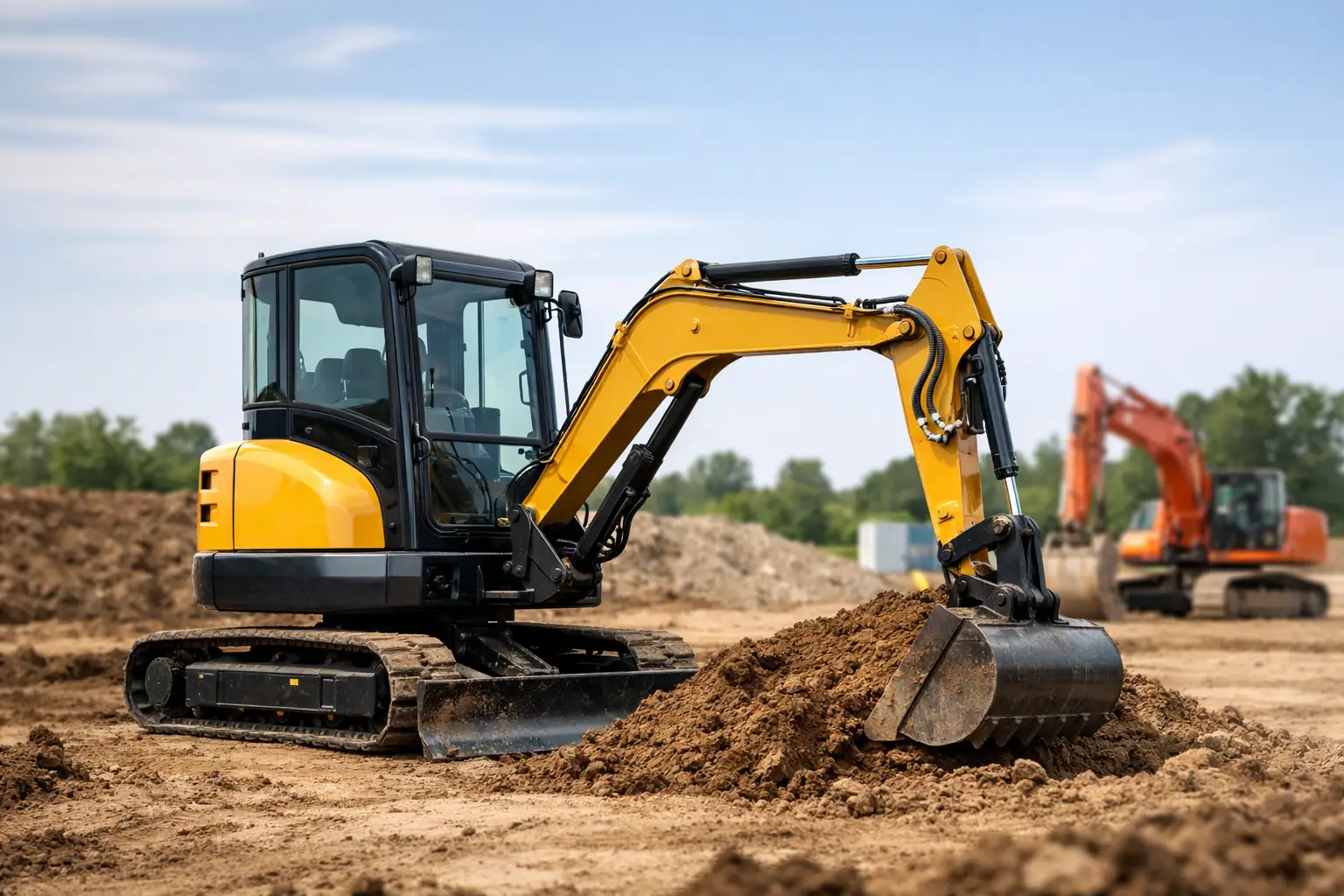
A zero tail swing excavator earns its keep where the jobsite has no room for a wide counterweight. When you are trenching along a block wall, digging beside a driveway, working near traffic, or cleaning up around existing structures, keeping the upper structure within the track width can prevent delays, reduce damage risk, and give the operator a safer working envelope.
For contractors across Jacksonville and Northeast Florida, that advantage is practical. Residential lots are tight, utility corridors are crowded, and site-development work often happens close to curbs, fences, drainage features, and active crews. The right compact excavator needs more than a small footprint. It must still deliver breakout force, digging depth, hydraulic performance, and operator comfort for a full shift of productive work.
What Zero Tail Swing Means on the Jobsite
On a zero tail swing excavator, the rear counterweight and upper structure stay within the machine’s track width as the house rotates. The operator can swing through a full rotation without the rear of the machine extending beyond the tracks.
That is different from a conventional-tail-swing excavator, where the counterweight projects outside the track width during rotation. Conventional designs can be an effective choice when the work area is open and lift capacity or stability is the priority. But in restricted spaces, the tail swing requires the operator to allow extra clearance on every rotation.
Zero tail swing does not mean the whole machine can work without planning. The boom, arm, bucket, attachments, and any load being carried still move outside the tracks. Operators must also account for ground conditions, slopes, overhead obstructions, underground utilities, and people working nearby. The design simply removes one frequent hazard: striking an object with the rear of the machine while swinging.
Where a Zero Tail Swing Excavator Works Best
This configuration is built for work that happens close to fixed obstacles. Utility crews can dig service trenches along roads or between structures without constantly repositioning the machine. Landscapers can shape drainage, install hardscape bases, and excavate around established trees in compact yards. Contractors working on demolition, additions, pools, and foundation repairs can keep the machine closer to the cut while maintaining room around the tracks.
Roadside and municipal work is another strong fit. A compact excavator that stays inside its track width can operate nearer to barriers and lane closures, which may reduce the amount of work zone required. That does not replace a traffic-control plan, but it can make a constrained work area more manageable.
The benefit is not only about avoiding contact. Less repositioning can help the operator maintain a steady digging cycle. If the machine can dig, swing, and place spoil without backing away from a wall or fence after each pass, production often improves. On a job billed by the day, those small cycle-time gains add up.
The Trade-Off: Stability and Lift Capacity
Tail swing configuration should never be the only buying decision. A zero-tail machine packages the counterweight tightly within the tracks, and that compact design can affect how a model feels when lifting heavy loads or working at maximum reach. The actual result depends on the specific machine, operating weight, undercarriage dimensions, hydraulic system, attachment, and lift point.
For digging, trenching, grading, and general site cleanup, a zero tail swing model may be the right answer. For repeated heavy lifting in open areas, a conventional-tail-swing machine may offer an advantage in stability or rated lift capacity. That does not make one design better across every job. It means the machine needs to match the work.
Ask what the excavator will do most often. A contractor installing utilities in established neighborhoods has different requirements than a site crew loading trucks in an open subdivision. An agricultural operator cleaning ditches may prioritize reach, travel performance, and attachment capability over tight-clearance rotation. The best specification is the one that supports the work you perform week after week.
Match Machine Size to the Work, Not Just the Access Point
A compact machine has to fit through the gate, but access width is only the first measurement to consider. Operating weight affects transport requirements, ground pressure, stability, and the class of work the machine can handle. Digging depth determines whether the machine can complete utility, drainage, or foundation work without costly hand labor or a second machine.
Dump height matters when spoil must clear truck sides or containers. Bucket breakout force and arm force affect productivity in compacted soil, clay, and demolition debris. Hydraulic flow and auxiliary hydraulic capacity matter when you plan to run a breaker, auger, grapple, thumb, mower, or other attachment.
JCB compact excavators cover a broad operating range, from the 3,649-pound 18Z-1 to larger models approaching 21,385 pounds. That gives buyers room to select a machine based on the work rather than choosing a size only because it is easy to tow. A smaller excavator can be a productive tool for light excavation and confined access, while a heavier compact model can provide more digging performance, reach, and lifting capability for demanding commercial work.
Transport should be part of the same conversation. Confirm the machine’s operating weight, attachment weight, trailer rating, tow vehicle capacity, tie-down requirements, and applicable regulations. A machine that fits the job but complicates every move between sites can affect operating costs and scheduling.
Operator Comfort Supports Daily Production
Tight-space work demands attention. Operators are managing the trench, spoil pile, attachments, nearby structures, and ground conditions in a limited area. A clear view of the work, responsive controls, a comfortable seat, and an organized cab or canopy layout help reduce fatigue over long days.
Visibility is especially valuable on zero-tail-swing work. The compact rear profile helps, but the operator still needs to see the tracks, the edge of the excavation, and the swing path. Use a spotter when site conditions require it, maintain communication with ground personnel, and establish a controlled work zone before digging begins.
Daily checks protect uptime. Inspect tracks, hydraulic hoses, couplers, bucket pins, fluids, and attachment connections before putting the machine to work. Verify that safety devices and alarms function correctly. In Florida’s heat, keep cooling systems clean and watch for material buildup that can restrict airflow. A productive compact excavator is one that starts each morning ready for the next trench, pad, or cleanup pass.
Questions to Ask Before You Buy
Start with the tightest job your crew handles, then look at the routine work that pays the bills. Measure access gates, building offsets, lane restrictions, and clearance around structures. Identify the typical trench depth, soil conditions, truck loading needs, and attachments required. Then compare those demands against each machine’s operating weight, tailswing type, dig depth, dump height, horsepower, hydraulic capability, and lift chart.
Also consider whether your business needs one flexible excavator or a machine dedicated to tight-access work. A zero tail swing model can be an efficient fleet addition when crews regularly work in developed areas, while a conventional-tail-swing excavator may still be the better fit for open-site production. Used equipment can be a sound option when condition, maintenance history, and specifications align with the workload.
A capable dealer can help turn those job details into a practical machine choice. At BRIGGS | JCB, the goal is to match the excavator to the work in front of your crew, not just the smallest space it can enter.
The right zero tail swing excavator gives operators room to work where room is scarce, while still bringing the digging power and durability a hard-working jobsite demands.