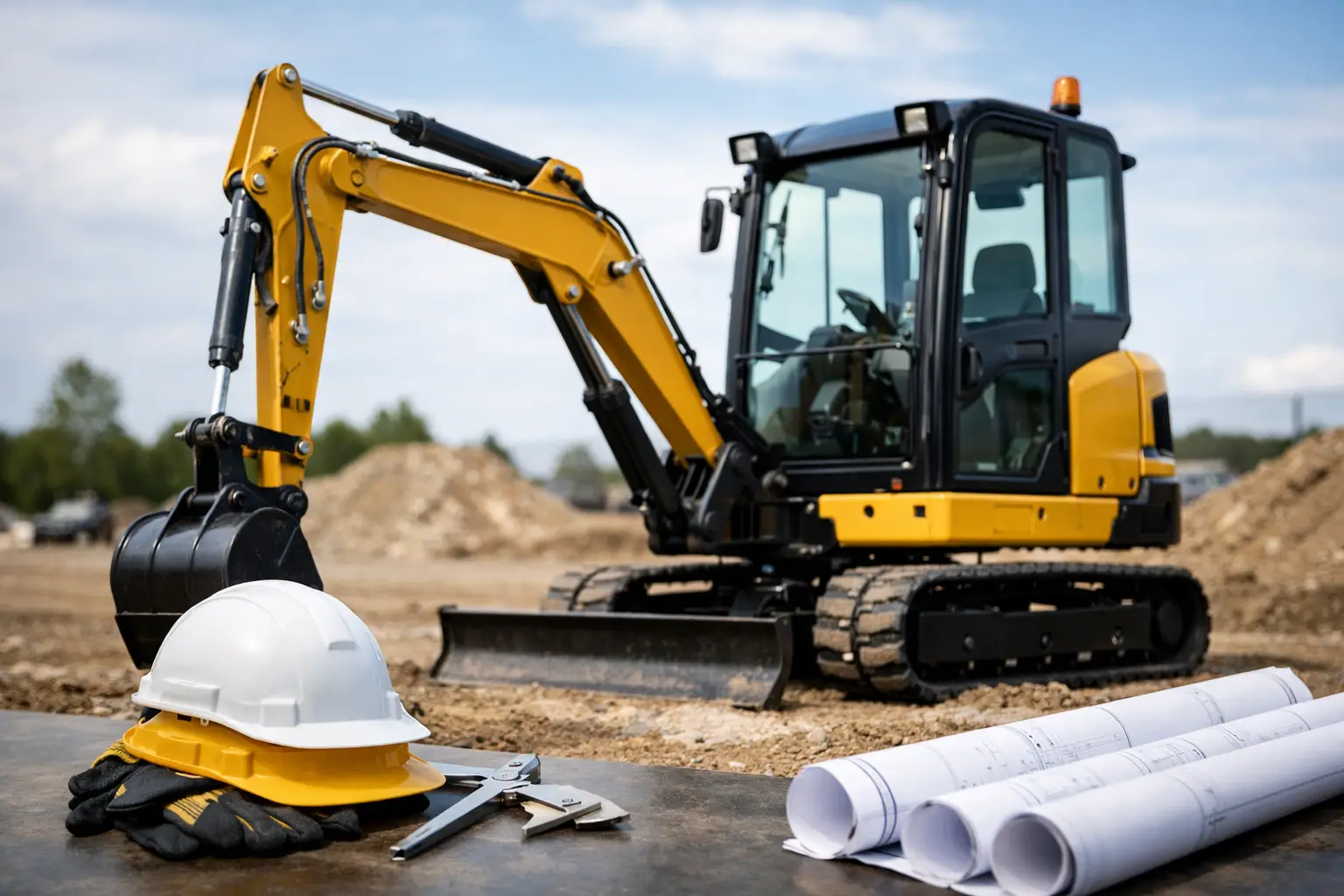
A compact excavator that cannot reach the trench bottom, clear the dump truck sideboard, or fit through the access gate will slow a crew down before the first bucket is full. This mini excavator specifications guide focuses on the numbers that affect production in the field, so you can match the machine to the work instead of buying capacity you cannot use.
The right model is rarely just the biggest machine a trailer can carry. Florida contractors often need to balance tight residential lots, soft ground, utility congestion, transport limits, and the need to move enough material each day to keep labor productive. Start with the job, then work through the specifications that determine whether an excavator will perform there.
Start With Operating Weight and Transport
Operating weight is one of the quickest ways to narrow the field. It affects ground pressure, trailer requirements, hauling costs, site access, and how the machine feels when digging or lifting. Lighter compact excavators are easier to transport and better suited to backyards, gates, sidewalks, and finished landscaping. Heavier models bring more stability, reach, breakout force, and lifting capability for sitework, drainage, and commercial utility work.
JCB’s compact excavator range runs from the 3,649-pound 18Z-1 to the 21,385-pound 100C-2. That spread matters. A machine in the 1.5- to 2-ton class can be a practical choice for fence-line drainage, irrigation, small demolition, and residential trenching where access is the first concern. A larger compact excavator can carry more work through a shift when the job calls for deeper excavation, truck loading, or repeated material handling.
Do not look at machine weight in isolation. Confirm the total transport package: excavator, bucket, coupler, additional attachments, trailer, ramps, fuel, and the tow vehicle’s rated capacity. A towable machine only saves time if your crew can legally and safely move it without arranging a larger truck or specialized transport.
Ground conditions deserve the same attention. A heavier excavator may be more productive on firm construction ground, but it can leave deeper marks on irrigated turf, saturated soil, or sensitive finished areas. Track width and track type also influence flotation and surface impact. Rubber tracks are often the right fit for developed sites, while operators still need to plan their travel path around curbs, concrete, underground structures, and soft shoulders.
Mini Excavator Specifications Guide: Digging Performance
Maximum digging depth is usually the first working specification buyers check, and for good reason. It tells you whether the machine can complete the trench or footing without repositioning on every pass. But maximum depth is not the same as productive working depth. Review the reach at ground level, maximum vertical wall depth, and digging radius along with the headline number.
A utility crew installing shallow services may not need extreme depth, but it may need strong reach to work safely from the edge of a trench. A contractor excavating footings needs to know whether the machine can maintain the required depth across the full width of the planned work. For drainage, consider pipe grade, trench box requirements, and the room needed to work without crowding the excavation.
Bucket breakout force and dipper arm force show how effectively the excavator can cut, pull, and load difficult material. These figures become more valuable when digging compacted fill, clay, roots, broken asphalt, or material mixed with rock. More force can reduce time spent feathering the bucket through resistant ground, but attachment choice and operator technique still matter. A correctly sized bucket often produces more than an oversized bucket that overloads the machine or leaves a rough trench.
Dump height is equally practical. If the excavator will load spoil into a dump truck, roll-off container, or high-sided trailer, verify the clearance at the actual working radius. A machine may have enough maximum dump height on paper but require an awkward position to reach it. Match the excavator and hauling setup before the job begins, especially when crews will be moving material continuously.
Engine Power and Hydraulic Flow
Horsepower supports travel, hydraulic performance, and recovery under load, but it is not a standalone measure of excavator productivity. Hydraulic flow and system pressure determine how the machine powers attachments and how responsive it feels during combined functions. If you plan to run a hydraulic breaker, auger, grapple, compactor, or mulcher, confirm the attachment’s flow and pressure requirements against the excavator’s auxiliary hydraulic specifications.
For straightforward trenching, grading, and loading, a smaller machine with well-matched hydraulics can be the efficient choice. For attachment-heavy work, insufficient auxiliary flow can leave an otherwise capable excavator underutilized. Ask whether the selected model has the auxiliary circuit, coupler arrangement, and control settings needed for the tools your crews use most.
Fuel use also belongs in the power discussion. More engine power can support greater output, yet the best operating cost is determined by production per gallon and production per labor hour. A machine that completes the task cleanly in fewer cycles may be the better value even if it burns more fuel than a smaller unit.
Tail Swing and Jobsite Clearance
Tail swing configuration changes where an excavator can work. Zero-tailswing models keep the counterweight within, or close to within, the track width as the house rotates. That is a major advantage beside buildings, retaining walls, traffic lanes, landscaping, and utility obstacles. It lets operators swing with less risk of striking something behind the machine.
Conventional-tailswing models may provide a different balance of stability and performance. They can be a strong fit where the work area is open and swing clearance is not a daily constraint. Neither design is automatically better. The decision depends on whether access and tight rotation are limiting production more than outright excavation capacity.
Measure the jobsite before choosing. Gate width, alley width, side-yard clearance, low branches, overhead services, and the available area for truck loading can eliminate a machine from consideration quickly. Also check transport width, not just tail swing. An excavator that turns safely near a wall still has to enter the site in the first place.
Lifting Capacity Is More Than a Single Number
Compact excavators regularly handle pipe, trench boxes, landscape blocks, culverts, and jobsite materials. Lifting capacity charts are essential for this work because capacity changes with reach, lift point height, and blade position. The strongest lift point is typically close to the machine, with the blade down and the load kept low. Capacity falls as the load moves farther away or higher in the air.
Review the chart for the actual material you intend to handle, then include the weight of the bucket, coupler, sling, hooks, and attachment. Work within rated limits and use approved lifting points and procedures. If lifting is a recurring function rather than an occasional task, stability, hydraulic control, and visibility should carry as much weight as maximum digging depth.
Cab, Controls, and Daily Uptime
An excavator earns its keep over long shifts, not during a five-minute demonstration. Operator comfort directly affects accuracy and fatigue, particularly on finish grading, utility work, and repetitive truck loading. Look for clear sightlines, sensible control layout, adjustable seating, climate protection where needed, and access that makes daily inspection straightforward.
Service access matters just as much. Check how easily operators can reach routine maintenance points, inspect fluid levels, clean cooling areas, and identify wear before it becomes downtime. For fleet buyers, consistency across controls and attachments can shorten training time and make it easier to move operators between machines.
Electric excavators may be worth considering for indoor work, noise-sensitive areas, and jobs with emissions restrictions. The trade-off is planning around charging, duty cycle, and available jobsite power. For the right application, lower noise and zero onsite exhaust can improve where and when a crew can work.
The best specification sheet is the one tied to your actual workload. Bring trench depth, access measurements, hauling setup, attachment plans, and typical material conditions into the buying discussion. At BRIGGS | JCB, that practical information helps narrow the selection to a compact excavator that fits the trailer, fits the site, and keeps the crew moving when the work gets demanding.