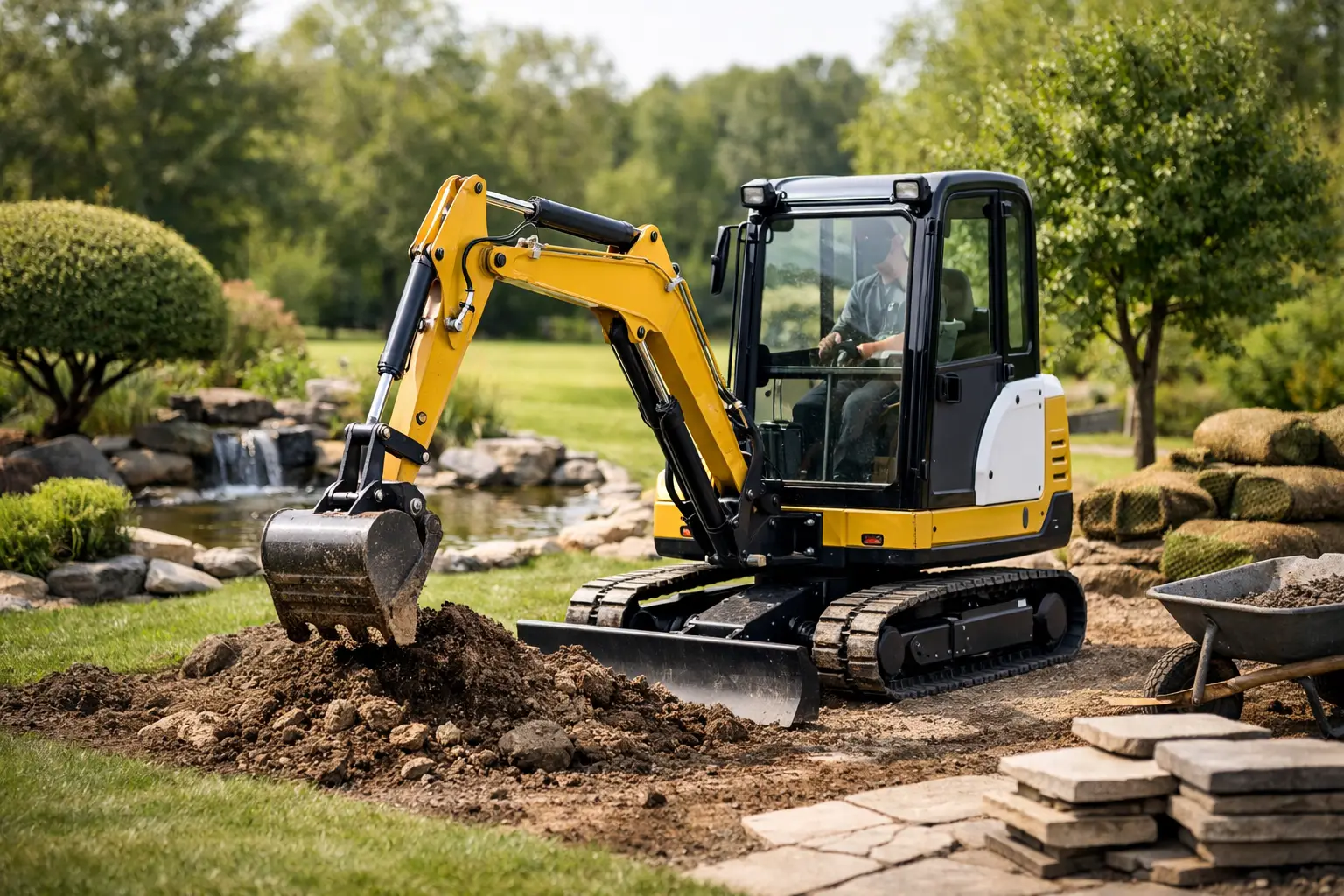
A compact excavator can turn a two-day hand-labor project into a controlled, one-operator operation – but only when the machine fits the property, soil, access route, and attachment work. Choosing a mini excavator for landscaping jobs is not just a question of getting the smallest machine onto a residential lot. It is about putting enough digging force, reach, stability, and hydraulic capacity on site without tearing up finished turf, blocking driveways, or creating a transport problem between jobs.
For landscape contractors across Jacksonville and Northeast Florida, the right excavator earns its place long after the first trench is dug. It can handle drainage corrections, tree and shrub removal, hardscape preparation, pond work, utility trenching, grading, and material placement with more control than a skid steer alone. The key is matching the machine to the work that keeps coming back on your schedule.
Start With the Work, Not the Machine Size
Landscaping covers a wide range of tasks, and the same property may require shallow trenching in the morning, boulder placement after lunch, and final grade work before the crew leaves. A machine selected only by price or operating weight can become a bottleneck when the attachment, reach, or digging depth falls short.
Begin with the deepest and widest work you perform regularly. Irrigation, electrical, drainage, and landscape lighting trenches may not demand extreme depth, but stormwater drainage and utility connections often do. Check the machine’s maximum dig depth, vertical wall depth, reach at ground level, and bucket breakout force. Those numbers tell you far more about day-to-day capability than a broad description such as “compact excavator.”
Then consider what happens above ground. If your crews routinely load spoil into high-sided dump trailers, trucks, or containers, dumping height matters. If they need to place stone behind retaining walls, move large trees, or reach over an obstacle, boom reach and lifting capacity become just as important as digging performance.
A lighter machine may be the right call for backyard access and tight gates. A larger compact excavator may save significant labor on drainage, demolition, and hardscape projects. There is no benefit to buying capacity you cannot transport or fit through the jobsite, but under-sizing a machine creates slow cycles and unnecessary wear.
Tailswing Determines Where You Can Work
Landscaping work often happens beside fences, patios, pools, buildings, and established plant material. In these conditions, tailswing configuration deserves close attention.
A zero-tailswing excavator keeps the counterweight within the track width as the house rotates. That helps operators work close to walls and property lines while reducing the risk of swinging into an obstruction. It is a practical choice for residential backyards, urban infill, and tight commercial landscaping projects where every foot of clearance matters.
Conventional-tailswing machines can offer strong stability and performance for their size, particularly where open space is available. They are well suited to larger site-development, agricultural, and commercial landscape work. The trade-off is the swing clearance required behind the machine. On a constrained lot, that clearance can force extra repositioning or put the counterweight too close to structures and workers.
Do not judge tailswing by the machine’s brochure description alone. Measure gate openings, side-yard paths, trailer clearances, turning areas, and the distance from the excavation to nearby structures. A machine that technically fits through an opening may still be inefficient if the operator cannot rotate safely or stage material effectively.
Digging Performance Is Only Part of the Job
A mini excavator is most productive when it handles more than excavation. Landscaping contractors commonly use buckets for trenching and cleanup, grading buckets for shaping soil, hydraulic thumbs for logs and debris, and hydraulic breakers for old concrete, rock, and small demolition tasks. Some operations also rely on augers, compactors, rakes, or brush-cutting attachments.
Before selecting a machine, confirm the hydraulic flow, auxiliary hydraulic configuration, and coupler options needed for the attachments you will use. A thumb is especially valuable for clearing roots, handling timbers, setting natural stone, and sorting demolition debris. It can reduce the number of times a crew member has to work in the swing area or manually manage irregular materials.
Attachment compatibility should be viewed as a fleet decision. If you already own hydraulic tools, determine whether a new excavator can run them at the correct flow and pressure. If not, the apparent savings on the base machine can disappear once new attachments are added.
Buckets deserve the same attention. A narrow trenching bucket provides clean utility work with less spoil to manage. A wider ditching or grading bucket is better for shaping swales, spreading material, and final contouring. Keeping the right buckets on the trailer lets a compact excavator move from rough excavation to finish work without sending another machine to the site.
Transport Weight Affects Daily Profitability
For contractors working multiple residential or commercial sites each week, towability is an operating-cost issue. Operating weight influences trailer selection, truck requirements, permits, loading procedures, fuel use, and how easily a crew can move before or after a workday.
A smaller excavator can often be hauled with a more manageable truck-and-trailer combination and is easier to route through crowded neighborhoods. That flexibility can be a major advantage for service-oriented landscape crews. However, transport weight should include more than the excavator’s listed operating weight. Add the trailer, buckets, thumb, fuel, attachments, ramps, chains, and any support equipment.
Larger compact machines demand more careful transport planning, but they can reduce the need for separate loaders, manual excavation, or subcontracted demolition on heavier projects. The right choice depends on whether your business is primarily moving between tight residential jobs or spending longer periods on larger commercial and site-development work.
Operator Comfort Supports Better Finish Work
Landscaping requires precision, particularly around irrigation lines, root zones, finished hardscape, and structures. Operators make better decisions when they can see the work clearly and stay comfortable through a long shift.
Look at visibility from the seat, control layout, travel pedal placement, cab or canopy options, and access for daily checks. A comfortable operator is not a luxury feature. Better visibility and predictable controls help reduce over-excavation, accidental contact with walls or curbs, and fatigue during repetitive trenching or grading.
Climate also matters in Florida. An enclosed cab with air conditioning can support productivity during long summer workdays, especially for operators who spend hours trenching, loading, or grading in direct sun. An open canopy may be a better fit for crews that prioritize lower acquisition cost, easy entry and exit, or jobs with frequent low-clearance access. Choose based on actual operating conditions rather than assuming one configuration is right for every crew.
Match the Machine to Ground Conditions
Florida sites can change quickly from sandy, easy-digging ground to saturated soil, roots, shell, broken concrete, or dense clay. Track choice and undercarriage setup affect how the excavator performs across those conditions.
Rubber tracks are commonly preferred for landscape work because they help protect driveways, pavers, lawns, and finished surfaces. They also provide a practical balance of traction and reduced ground disturbance. Wider tracks can lower ground pressure in soft conditions, but they may affect transport width and clearance in tight access areas.
When working around mature landscaping, remember that low ground disturbance does not eliminate the need for a plan. Establish travel paths, protect vulnerable turf and root zones, stage spoil away from drains and finished surfaces, and avoid unnecessary machine movements. A compact machine gives an operator more control, but it still needs disciplined site setup.
Comparing Compact Excavator Sizes for Landscape Crews
For light residential work, a machine in the smallest compact class can be a strong fit when access is limited and the primary work is trenching, planting preparation, small stump removal, and light grading. These machines are easier to transport and maneuver, but their lifting capacity and reach are limited.
Mid-size compact excavators often provide the best balance for established landscaping contractors. They carry enough power for drainage, retaining-wall preparation, material handling, and regular attachment use while remaining practical for residential and commercial access. This range is often where owners find the most versatile one-machine solution.
For heavier hardscape, large drainage, site clearing, demolition, or recurring commercial work, a larger compact excavator can justify its operating cost. More digging depth, lift capacity, and breakout force improve cycle times, but the machine needs a compatible trailer, tow vehicle, and sufficient working room.
JCB’s compact excavator range spans small access-focused units through larger machines built for demanding excavation and material-handling work. Comparing exact operating weight, dig depth, dump height, engine output, and tailswing type against your normal jobs is the fastest way to narrow the field.
Make the Purchase Decision Around Utilization
The best excavator is the one that spends productive hours on paid work. Review the past six to twelve months of jobs and identify how often you rented equipment, subcontracted excavation, delayed work for manual labor, or turned down projects because you lacked capacity. Those patterns show whether ownership makes sense and what size machine will be used often enough to support the investment.
Also consider new and used equipment based on your workload, maintenance plan, and financing needs. A new machine may be the better choice for a contractor building a dependable long-term fleet or requiring the latest configuration. A well-maintained used machine can be a practical entry point when the goal is to bring excavation in-house without overextending capital.
Before committing, put your common job measurements and attachment requirements beside the machine specifications. A mini excavator that clears your gates, rides safely on your transport setup, reaches the required depth, and runs the tools your crews need will keep landscaping work moving without asking the operator to work around the machine’s limits.