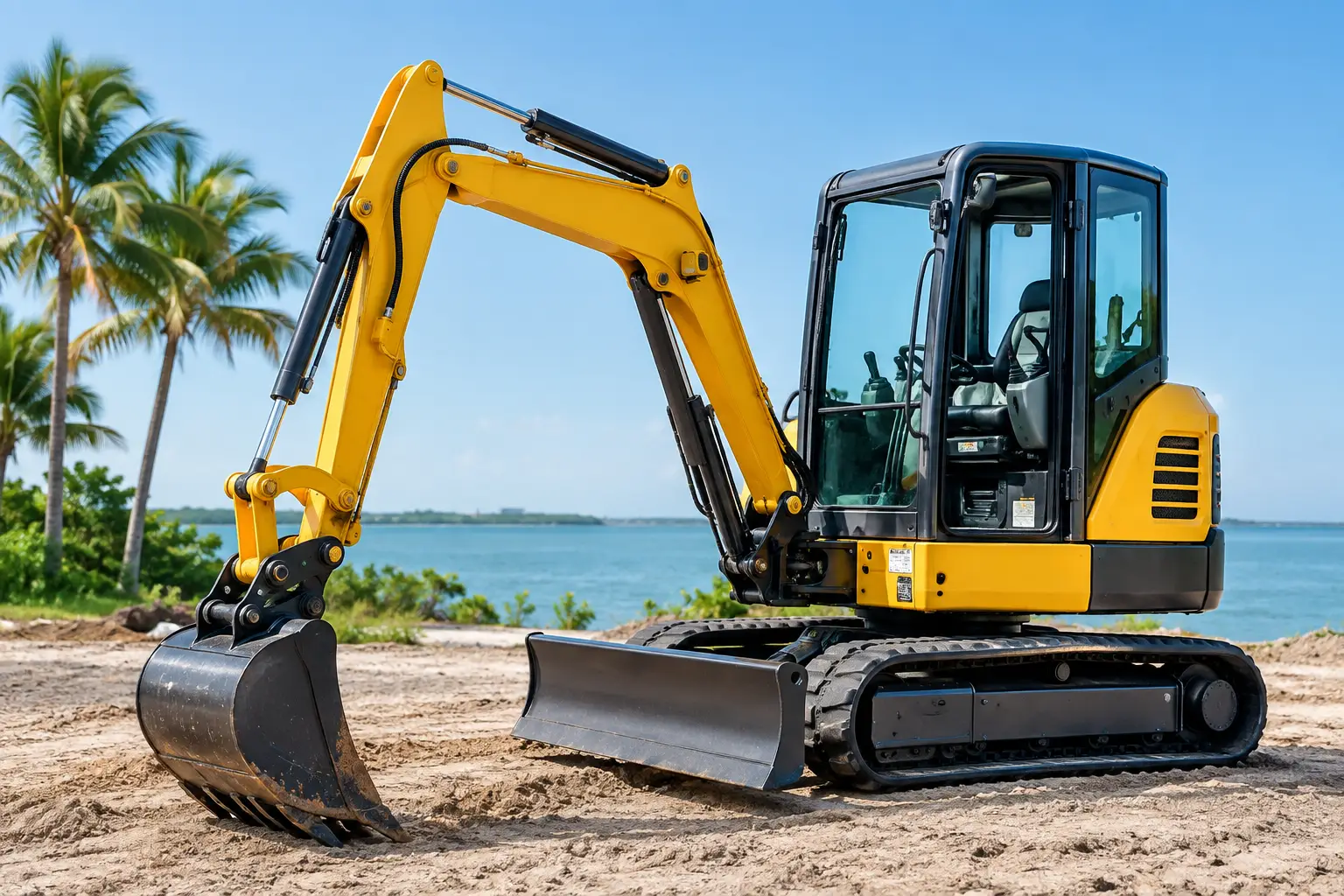
A compact excavator that looks right on the lot can become the wrong machine when it reaches a narrow easement, deep utility trench, or soft Florida site. This compact excavator buying guide focuses on the specifications that affect production every day: machine size, digging range, tailswing, transport, attachments, and operator setup.
The goal is not to buy the largest machine your budget allows. It is to buy the excavator that completes your recurring work with fewer repositioning moves, less hand labor, safe access, and dependable cycle times. For some contractors, that means a light machine that can be towed behind an existing truck. For others, it means stepping up in operating weight and hydraulic performance to handle tougher trenching, loading, and attachment work.
Start With the Work, Not the Machine Class
Before comparing brochures, look at the jobs that keep your crews busy for most of the year. A landscaper installing drainage and building retaining walls has different requirements than a utility contractor working around existing services. A site contractor loading trucks and shaping lots needs a different balance than a municipality maintaining ditches or an agricultural operation cleaning fence lines.
Write down the depth you regularly need to reach, the width of the access points you enter, the material you excavate, and the truck or trailer you use. Also consider where the machine spends time between digs. A compact excavator may have the reach to dig a trench, but poor dump height can slow loading if it cannot clear the sideboards on your trucks efficiently.
Florida conditions deserve a direct look. Sandy soils can make digging faster, yet loose ground, wet areas, and frequent rain can change traction and stability. Coquina, roots, buried debris, and compacted fill can demand more breakout force and hydraulic power than the job description suggests. Match the machine to the hardest routine part of your work, not just the easiest day on the schedule.
Choose Operating Weight With Transport in Mind
Operating weight influences stability, lift capacity, digging force, ground pressure, and transport requirements. Smaller machines are easier to maneuver through backyards, gates, and confined commercial sites. They can also be simpler to tow, which matters for owner-operators and crews moving from job to job.
The trade-off is straightforward: a lighter excavator is not automatically cheaper to operate if it requires more cycles, more machine repositioning, or more manual work. Moving up in size can improve trenching speed, lift capability, and attachment performance, especially when handling pipe, block, spoil, or demolition material.
Check the complete transport package before committing. Add the excavator, bucket, coupler, hydraulic attachments, trailer, fuel, and required tie-down equipment. Then compare that total with your truck’s rated towing and payload capacities. A machine that fits a trailer is not necessarily a machine that can be transported legally and safely with the truck you already own.
JCB compact excavators range from smaller models such as the 3,649-pound 18Z-1 to larger compact machines such as the 21,385-pound 100C-2. That range gives buyers room to match a machine to access restrictions, lifting needs, and hauling plans rather than forcing every job into one size class.
Digging Depth, Reach, and Dump Height Set Your Production Range
Dig depth gets attention because it is easy to compare, but it should not be the only digging specification you evaluate. Maximum reach at ground level affects how much trench or ditch line you can complete before moving the tracks. A longer reach can reduce repositioning and protect finished surfaces when working from a road edge or paved area.
Look at the depth required for your normal utility, drainage, footing, and irrigation work. Leave a practical margin. Buying a machine rated exactly to the deepest trench on your schedule can put the operator at the edge of the machine’s working range, where digging is less efficient.
Dump height matters just as much when spoil must go into a truck, dumpster, or high-sided trailer. Confirm the actual loading height for the vehicles in your fleet. A machine with strong digging performance but limited dump clearance may require a different spoil-handling plan that costs time on every load.
For lifting applications, review the lift chart rather than relying on a general impression of machine size. Rated lift capacity changes with boom position, stick position, lift point, and whether the blade is down. A compact excavator can handle pipe, structures, and materials efficiently, but only when the load stays within the published limits and the lift is planned correctly.
Zero Tailswing or Conventional Tailswing?
Tailswing configuration has a direct effect on safety and productivity around obstacles. A zero-tailswing excavator keeps its counterweight within, or close to within, the track width as it rotates. That makes it a strong fit for work beside buildings, traffic barriers, fences, parked vehicles, and open trenches. In tight spaces, reduced tail overhang gives operators more room to swing without creating a strike hazard.
Conventional-tailswing machines can be a good choice when the jobsite offers room to work and stability is a priority. Depending on the model and application, the rear counterweight can support stronger lifting and digging performance. The right choice depends on the site, not a universal rule.
If your crews routinely work in residential yards, utility corridors, or congested commercial renovations, zero tailswing often pays for itself in easier positioning and reduced risk around nearby objects. If most work takes place on open sites, compare lift and digging specifications closely before deciding.
Hydraulic Performance Determines Attachment Value
Buckets are only the beginning. A compact excavator becomes more useful when it can efficiently operate the attachments that remove separate labor steps from the job. Hydraulic thumbs help crews sort debris, place material, and handle irregular objects. Breakers support concrete removal and demolition. Augers speed up postholes and foundation work, while grading buckets and tilt attachments improve finish work.
Do not assume that an auxiliary hydraulic connection alone makes a machine ready for every attachment. Verify auxiliary flow, operating pressure, coupler compatibility, attachment weight, and the machine’s hydraulic capacity. A breaker or auger that is mismatched to the excavator can feel slow, create unnecessary wear, and reduce the return on the attachment investment.
Ask how quickly operators can change attachments in the field. For a crew that switches between trenching, material handling, and grading several times a week, a compatible quick coupler can make a meaningful difference. Also consider whether the excavator needs a hydraulic thumb from day one. Adding it later may be possible, but planning the machine around regular material-handling work is often more efficient.
Do Not Treat Operator Comfort as an Extra
A compact excavator works best when the operator can stay accurate through a full shift. Cab or canopy selection, seat support, control layout, visibility, HVAC options, and low-effort controls all affect fatigue. In Northeast Florida heat and humidity, climate control can be a production feature, not a luxury, for crews running long days.
Good visibility to the bucket, trench edge, tracks, and swing area supports safer work around laborers, utilities, and structures. Features such as travel alarms, work lights, mirrors, cameras where available, and lockable hydraulic controls should be evaluated as part of the operating package.
A lower purchase price does not offset frequent operator fatigue, slow transitions, or difficult service access. Put experienced operators in the seat when possible. They will notice blind spots, control response, legroom, and cab access quickly.
New, Used, or Electric: Match the Purchase to Your Operating Plan
A new compact excavator may make the most sense when uptime, warranty coverage, current safety features, and standardized fleet specifications are priorities. It also gives buyers the cleanest path to selecting the exact hydraulic, cab, coupler, and attachment configuration needed for the work.
A used machine can be a practical purchase for a growing contractor, a specialty application, or a backup unit. Inspect service history, hours, undercarriage condition, pins and bushings, hydraulic cylinder leaks, track wear, and attachment connections. Run the machine through its full operating range and listen for unusual noises or weak hydraulic response. The cheapest used excavator is rarely the best value if it needs major work during the busy season.
Electric compact excavators deserve consideration for indoor work, noise-sensitive areas, and sites with emissions restrictions. They can be highly effective in the right application, but charging access, runtime, duty cycle, and available electrical service must be part of the purchase decision. For remote or extended shifts, a diesel model may remain the more practical fit.
Build the Quote Around the Whole Job
The machine price is only one part of the investment. Request a quote that reflects the bucket sizes, coupler, thumb, auxiliary hydraulic setup, cab or canopy, transport needs, and attachments required for actual field work. Discuss financing in terms of monthly cash flow and expected utilization, not just the lowest payment.
Dealer support also matters once the machine is on the schedule. Parts access, service capability, machine familiarity, and a clear plan for routine maintenance all protect uptime. A compact excavator earns its keep when it is working, not when it is waiting for a small issue to become a jobsite delay.
Bring your most common trench depth, access width, truck height, trailer rating, and attachment list to the buying conversation. Those details turn a general comparison into a machine decision your crew can put to work on Monday.