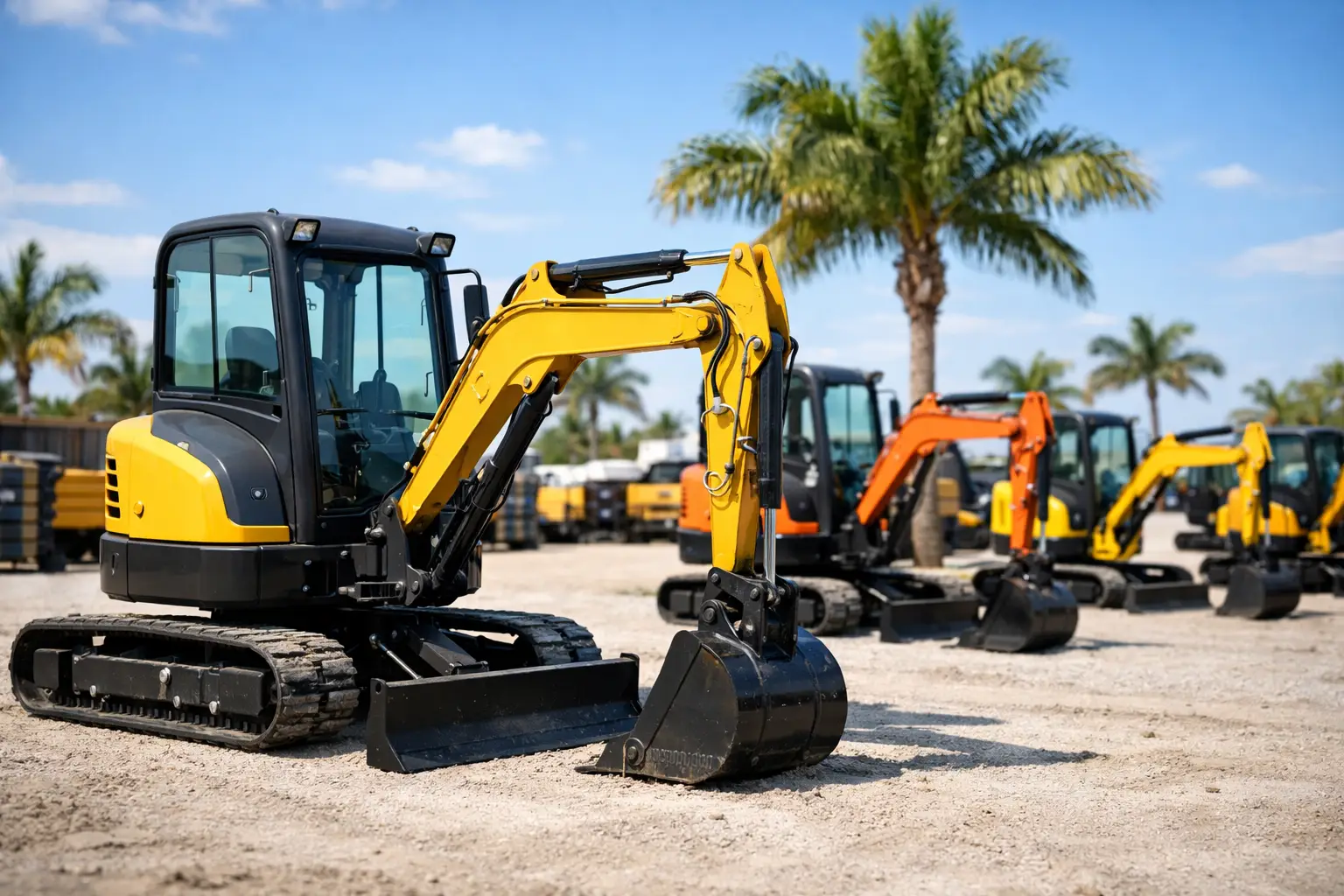
A compact excavator that is undersized for the trench, oversized for the access road, or difficult to haul can cost a crew time before the first bucket reaches the ground. Florida contractors need machines that can work around established homes, tight commercial lots, utility corridors, soft site conditions, and afternoon rain without becoming a transport or productivity problem. When comparing mini excavators for sale in Florida, start with the work, the site, and the trailer – not just the purchase price.
A mini excavator should earn its place on the jobsite through productive digging, controlled lifting, easy transport, and dependable daily operation. The right machine may be a compact zero-tailswing model for backyard utility work, a conventional-tailswing unit for open-site digging, or an electric excavator where low noise and zero exhaust matter. There is no single best operating weight or dig depth. There is only the best fit for the jobs your crew performs most often.
Match the Excavator to Florida Jobsite Conditions
Florida work brings a different set of operating considerations than hard, dry ground in other markets. Sandy soils can move quickly, but wet conditions, loose material, standing water, and unstable trench edges demand careful machine placement. On developed sites, crews may also be working close to curbs, buildings, irrigation, underground utilities, and traffic.
Start by identifying the machine’s primary role. A landscaping contractor may need a compact excavator that can pass through gates, shape drainage, place stone, and run a thumb or auger. A utility crew may prioritize dig depth, reach, hydraulic attachment performance, and the ability to work beside a roadway. A site-development contractor may need more operating weight, breakout force, and lifting capability for pipe, structures, and continuous production.
The machine does not need to handle every possible task at maximum capacity. It needs to handle your routine workload efficiently while leaving enough capability for the jobs that drive revenue. Buying too small often means slower cycles and limited attachment options. Buying too large can mean more difficult hauling, less access, and unnecessary cost on confined sites.
Mini Excavators for Sale in Florida: Start With Size
Operating weight is one of the fastest ways to narrow the field. It affects transport requirements, ground pressure, lifting stability, available power, and how easily the machine fits into the work area.
Smaller machines, including models in the roughly 3,649-pound class, are practical for residential work, drainage repairs, fence-line clearing, and jobs where access is the first constraint. Their compact footprint and towability can make them a strong choice for owner-operators who move between several smaller projects in a week. The trade-off is less reach, lift capacity, and trenching performance than a larger excavator can provide.
Mid-range compact excavators are often the daily production choice for utility, construction, landscaping, and light sitework crews. They provide more digging power and working range while remaining manageable on a trailer. For many businesses, this is the category where attachment versatility and operator comfort begin to make a major difference over a full day.
Larger compact excavators, including machines approaching the 21,385-pound class, bring greater depth, reach, lifting capability, and stability. They are suited to demanding excavation, demolition support, material handling, and larger site-development work. They can produce more per hour, but buyers should confirm trailer capacity, towing setup, site access, and the ground conditions they will encounter.
Check the Numbers That Affect Production
A brochure should not be treated as a checklist of maximum figures. Compare specifications against the way your crew actually works. Digging depth matters when utility lines, footings, drainage systems, or septic work require a consistent trench depth. Dumping height matters if material will be loaded into trucks or bins. Reach at ground level affects how often the operator must reposition.
Engine power and hydraulic flow influence how the excavator responds under load and how well it supports attachments. Bucket breakout force and arm force affect cycle times in compacted material, roots, clay pockets, and demolition debris. Lift capacity should be evaluated at the radius and height where the load will be handled, not only by a headline maximum.
Ask a practical question: will the machine spend most of its day digging, lifting, grading, loading, or running an attachment? That answer should guide the specification conversation.
Choose the Right Tailswing Configuration
Tailswing is a jobsite decision, not a styling preference. Zero-tailswing excavators keep the upper structure within, or close to within, the track width during rotation. That makes them valuable beside buildings, walls, traffic lanes, landscaping, and active crews. Operators can swing with more confidence in tight spaces, reducing the need for repeated repositioning.
Conventional-tailswing models can provide a different balance of stability, counterweight, and performance. On open jobsites with room to rotate, they may be an efficient fit for heavier digging and lifting work. The key is to be honest about access. A machine that performs well in an open yard may be difficult to use productively behind a residence or along a narrow utility easement.
For indoor work, enclosed projects, municipal facilities, and applications where emissions or noise are restricted, an electric excavator deserves a close look. Electric operation can support work where diesel exhaust is unacceptable, while the compact excavator format still delivers precise digging and material handling. Runtime, charging plans, and the daily work cycle should be reviewed before selecting this configuration.
Transport Is Part of the Purchase Decision
An excavator that fits the job but complicates every move between jobs can erode its value. Confirm the operating weight with the bucket, coupler, thumb, and frequently used attachments installed. Then account for the trailer, tie-down equipment, fuel, and the tow vehicle’s real capacity.
Smaller mini excavators can be a strong fit for contractors who need a machine that moves quickly with a properly matched truck and trailer. Larger units may justify a more capable transport setup because they deliver higher production, but that cost belongs in the buying decision. Consider how often the machine will move, who will haul it, and whether permits or routing constraints may affect larger loads.
Access at the destination matters just as much. Measure gates, side yards, bridge limits, turning areas, and clearance under branches or structures. A few inches of width or tail clearance can determine whether a crew gets to work immediately or spends time removing obstacles and changing the plan.
Build the Machine Around the Work
A mini excavator is more productive when its attachments match the services you sell. A hydraulic thumb helps crews handle broken concrete, brush, pipe, and irregular material. Augers support post holes and foundation work. Breakers add demolition capability. Compaction wheels, grading buckets, and specialized trenching tools can reduce manual labor when used for the right applications.
Attachments add cost, weight, and hydraulic demand, so they should be selected with purpose. A contractor who occasionally needs an auger may have a different buying case than a crew that uses one on nearly every project. Verify hydraulic compatibility, coupler options, attachment flow requirements, and whether the excavator can maintain the control needed for precision work.
Operator comfort also has a direct effect on output. A well-laid-out cab or canopy, clear visibility, responsive controls, comfortable seating, and practical service access help the operator stay productive through a long shift. Safety features should support the environment where the machine works, including visibility around the machine, stable footing, secure access, and controls that are predictable under load.
New or Used: Decide Based on Uptime Needs
New equipment gives buyers access to current configurations, known machine history, and the ability to select the model and options that fit their operation. It can be the right choice for contractors putting an excavator into regular service, growing a fleet, or standardizing around a particular machine class.
Used equipment can be a practical purchase for seasonal work, a first machine, a backup unit, or a business with a narrower budget. The value depends on condition, service history, hours, undercarriage wear, hydraulic performance, pins and bushings, and overall maintenance. A lower purchase price is not a bargain if the machine needs immediate repairs or cannot be counted on during a scheduled project.
Financing can help align the equipment payment with the revenue the machine is expected to produce. The goal is not simply the lowest monthly number. It is a payment structure that supports cash flow while giving the business enough capability to complete work efficiently.
BRIGGS | JCB can help Florida buyers compare new and used JCB compact excavators by operating weight, dig depth, tailswing design, attachments, and transport requirements. Bring the details of your typical project, the materials you handle, and the access limits your operators face. A properly matched excavator becomes more than another piece of iron – it becomes the machine your crew reaches for when the schedule is tight and the work has to move.