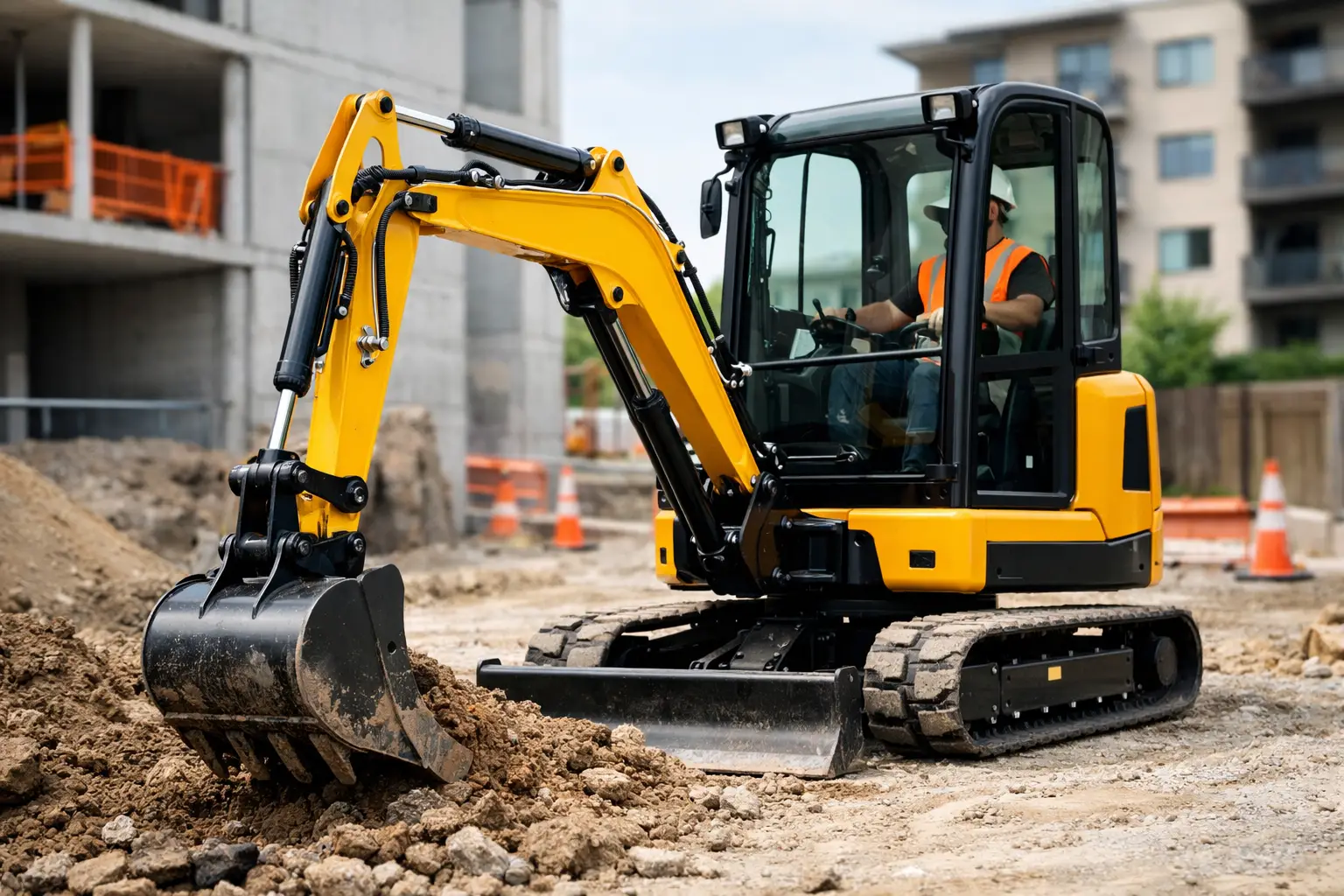
A JCB 18Z-1 mini excavator earns its place on a jobsite when access is the first challenge. Whether the work is behind a Jacksonville home, alongside an existing structure, inside a gated utility easement, or on a landscaped commercial property, this compact machine is built to get productive where a larger excavator cannot fit comfortably. At 3,649 pounds, it gives contractors a practical combination of transportability, controlled digging performance, and zero-tailswing maneuverability.
For owner-operators, crews adding a compact excavator to their fleet, and rental operators serving tight-access work, the question is not whether a smaller machine can move dirt. The question is whether it can do the work safely, efficiently, and repeatedly without creating more site disruption than the project allows. That is where machine size, tail swing, operator visibility, attachment needs, and transport planning matter.
Why the JCB 18Z-1 Mini Excavator Fits Tight Work Areas
The 18Z-1 is a zero-tailswing mini excavator. That means the counterweight stays within the track width as the upper structure rotates. On a narrow residential lot or beside a wall, fence, curb, parked vehicle, or utility line, that design gives the operator more room to work without constantly worrying about the rear of the machine swinging into an obstruction.
Zero tailswing does not remove the need for a spotter or a deliberate swing plan. It does, however, reduce the operating envelope and helps crews stay productive in areas where every foot of clearance matters. For trenching near structures, digging footings in a confined corner, or loading spoil into a nearby dump trailer, the ability to rotate within the machine’s footprint can save time through the entire cycle.
Its compact operating weight also supports straightforward mobilization. A 3,649-pound excavator can be a practical fit for contractors who need to move between smaller jobs without dedicating a heavy truck and large equipment trailer to every project. Buyers should still calculate the complete transport package: machine, bucket, attachment, trailer, fuel, tie-down equipment, and the towing vehicle’s ratings. Towability is valuable only when the full combination is legal, properly balanced, and suited to the crew’s daily route.
Where a compact zero-tailswing machine pays off
The 18Z-1 is a strong match for light excavation and finish-sensitive work where access is limited and a full-size machine would be excessive. Typical applications include utility trenching, irrigation installation, drainage repairs, residential site preparation, landscaping excavation, small demolition tasks, agricultural maintenance, and digging around buildings.
It can also support crews that already have larger excavators. A fleet does not need every machine to handle every task. A compact excavator can take on punch-list digging, service connections, backyard access, final grading preparation, and smaller repair work while larger equipment remains on high-volume production jobs. That split can improve fleet utilization instead of sending an oversized machine to a project that cannot use its full capacity.
What to Evaluate Before Buying an 18Z-1
The right compact excavator is not selected by operating weight alone. Buyers should start with the work they perform most often, then look at the site conditions that slow their crews down. A machine that is ideal for backyard drainage work may not be the best choice for deep utility runs, repeated truck loading, or handling heavier materials.
Digging range and working geometry
Dig depth, reach at ground level, and dump height should be reviewed against the actual work plan. For example, a contractor installing shallow drainage or irrigation lines may prioritize compact dimensions and precise control. A utility crew working deeper services needs to confirm the required trench depth, pipe placement room, and safe working position before choosing the machine.
Dump height also deserves attention. If spoil will be loaded into a trailer or truck, verify that the machine can clear the sideboard height at a practical loading position. A machine may have enough digging capability for the project but lose efficiency if the operator must repeatedly reposition or if a second machine is required to manage spoils.
Ground conditions and track setup
Florida jobsites can shift quickly from dry sand to wet soil, turf, clay, shell, or uneven demolition debris. Compact tracks help spread machine weight and provide traction, but operators should still consider the surface being crossed and the cleanup standard expected by the customer.
On finished residential property, the smaller footprint of the 18Z-1 can help reduce disturbance compared with larger equipment. That does not mean there will be no impact. Tight turns, repeated travel, wet conditions, and loaded buckets can mark turf or soft ground. Crews should establish travel paths, use ground protection when warranted, and avoid working a site when conditions make damage unavoidable.
Attachment and bucket requirements
A compact excavator becomes more valuable when it is set up for the tasks a crew performs every week. Bucket width affects trench production, spoil management, and restoration work. A narrow trenching bucket can reduce backfill volume and material removal, while a wider bucket may be better for cleanup, shaping, and light grading.
Before specifying an attachment, confirm hydraulic compatibility, machine capacity, coupler arrangement, and the effect on lift and digging performance. A small machine can handle a wide range of work, but it should not be asked to perform outside its intended limits. Attachment selection is a productivity decision, not an afterthought.
Operator Comfort Supports Better Production
Compact does not have to mean cramped or difficult to operate. On recurring trenching, foundation repair, and landscaping jobs, operator fatigue affects accuracy and pace. Controls that are easy to reach, a clear view of the work area, and a well-organized operating station help the operator place the bucket accurately and work with greater confidence around existing improvements.
Visibility is especially valuable with zero-tailswing equipment. The compact rear profile helps around obstructions, but the operator still needs a clear understanding of where the tracks, boom, bucket, and surrounding crew members are positioned. Safe operation starts with a walkaround, utility locates, stable ground, and communication that stays consistent from the first bucket to final backfill.
For businesses placing different operators on the machine, simple and predictable controls can also shorten familiarization time. That can be useful for rental fleets, municipal departments, and contractors whose crews move between multiple compact equipment types.
When to Size Up Instead
The JCB 18Z-1 is built for restricted spaces, not for every excavation assignment. If your work regularly demands deeper trenches, heavier lifting, longer reach, high-volume loading, or large hydraulic attachments, stepping up to a larger mini excavator may produce better cycle times and lower cost per yard moved.
The same applies to open sites with substantial production requirements. A larger machine may burn more fuel and require more transport planning, but it can be the better business decision if it reduces days on the job. Equipment selection should account for the work that creates the most revenue, not just the smallest site a crew occasionally encounters.
Conversely, sizing up too far can create access problems, increase mobilization cost, and leave an operator unable to work efficiently near homes, walls, pools, and finished landscaping. The best fit is the machine that matches the site constraints and workload most of the time.
A Practical Buying Conversation
Before requesting a quote, bring the details that affect machine fit: typical trench depth, material type, access width, trailer capacity, intended attachments, expected hours of use, and whether the machine will work around finished surfaces. These details allow a dealer to help compare the 18Z-1 against larger or differently configured JCB compact excavators based on real field requirements.
New equipment can provide a known maintenance starting point and current machine configuration, while used equipment may be a practical route for a buyer managing upfront cost. In either case, inspect the machine’s condition, service history, track wear, hydraulic performance, controls, pins and bushings, and attachment setup. Financing options can also help align the purchase with cash flow and expected utilization.
For Northeast Florida contractors, BRIGGS | JCB can help match a compact excavator to the work instead of asking the work to fit the machine. The right 18Z-1 setup should make tight access less of a limitation, keep transport manageable, and give the crew the control needed to leave a clean jobsite behind.