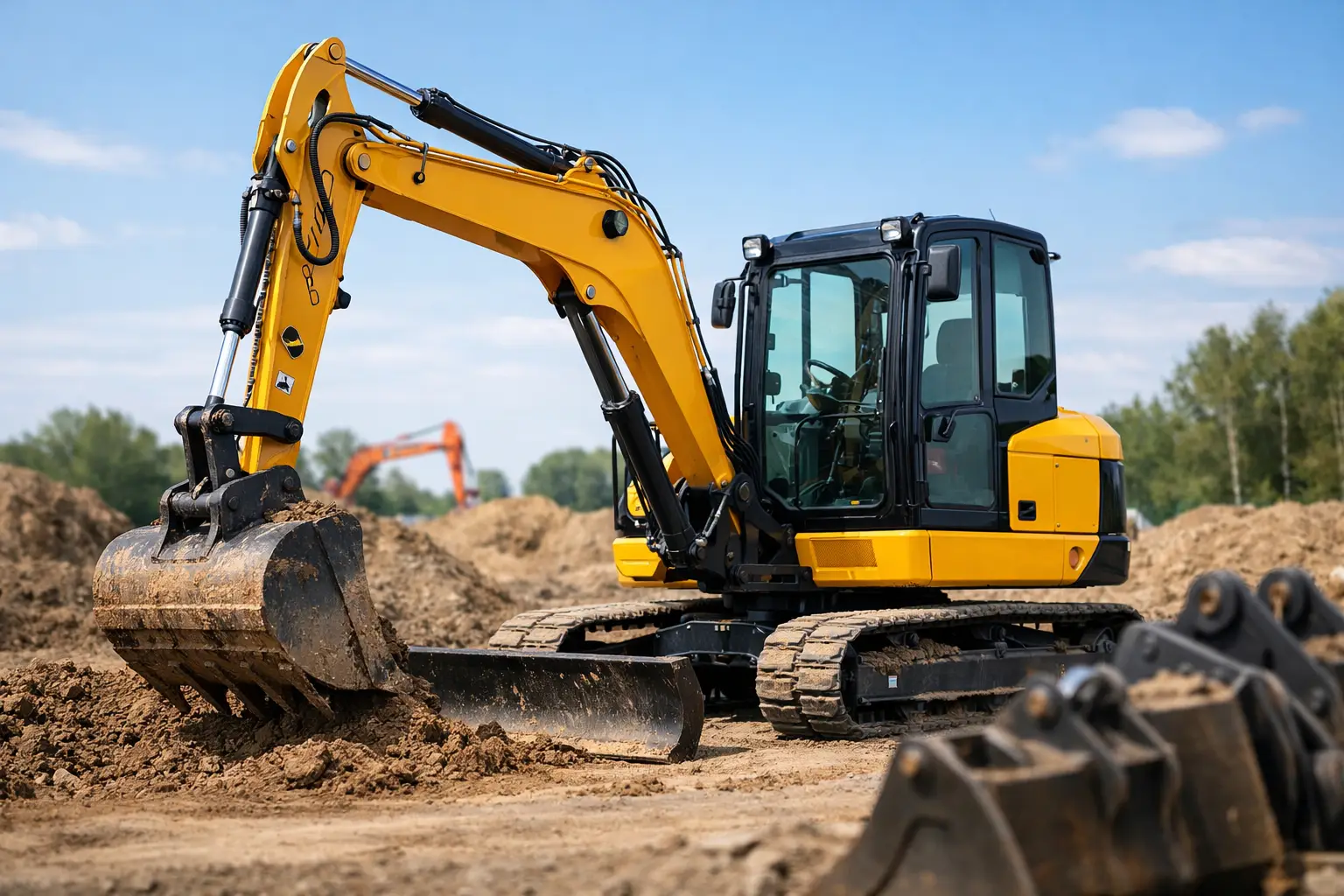
The JCB 100C-2 excavator specifications put this machine in a productive middle ground for crews that need more reach, breakout force, and lifting capability than a smaller compact excavator can provide, without stepping into a much larger transport and operating footprint. At 21,385 pounds, the 100C-2 is built for serious trenching, site preparation, drainage, demolition support, and material handling on commercial, utility, municipal, and agricultural jobs.
For contractors, the numbers matter because they determine whether the machine can finish the work efficiently. Digging depth affects utility and drainage work. Dump height affects truck loading. Operating weight, tailswing, and transport dimensions affect how easily the excavator moves between Jacksonville-area jobsites and works around buildings, traffic, stockpiles, and existing structures.
JCB 100C-2 Excavator Specifications at a Glance
The following core figures give buyers a practical starting point when comparing the 100C-2 with other machines in the 9- to 10-ton class.
| Specification | JCB 100C-2 | |—|—:| | Operating weight | 21,385 lb | | Engine power | 74 hp | | Maximum digging depth | 15 ft 1 in | | Maximum dump height | 16 ft 2 in | | Tailswing configuration | Conventional tailswing | | Machine class | Compact excavator / approximately 10-ton class |
These figures describe why the 100C-2 earns consideration from crews moving beyond a small mini excavator. A 15-foot-1-inch dig depth supports common utility trench, drainage, footing, and site-development tasks without constantly repositioning the machine. The 16-foot-2-inch dump height also gives operators useful clearance when loading spoil, aggregate, and demolition debris into trucks or roll-off containers.
Exact working dimensions, lift figures, bucket capacities, hydraulic attachment requirements, and transport setup should be reviewed for the specific machine and attachment package. A grading bucket, trenching bucket, hydraulic hammer, auger, or thumb changes what the excavator can accomplish and can change operating weight.
What 21,385 Pounds Means on the Jobsite
The operating weight is more than a transport number. It affects stability, digging performance, and how confidently an operator can work with a loaded bucket or an attachment. At 21,385 pounds, the 100C-2 has the planted feel needed for sustained excavation and loading work, especially compared with lighter compact machines that may be easier to tow but have less stability in hard digging conditions.
That added machine mass is useful on Florida jobs where crews encounter compacted fill, wet ground, broken concrete, root systems, and variable soil conditions. It helps the excavator stay composed while crowding the bucket, working across the tracks, or handling material near the limits of its reach.
The trade-off is transport planning. This is not a machine that should be selected on the assumption that it will move like a 3- or 5-ton excavator. Buyers need a properly rated trailer, tow vehicle, tie-down equipment, and a clear understanding of total transport weight with buckets and attachments. For fleet managers, that planning is usually straightforward. For an owner-operator stepping up in size, it should be part of the purchase decision from the start.
Engine Power and Hydraulic Work Capacity
With 74 horsepower, the JCB 100C-2 has the engine output to support productive digging cycles and hydraulic attachment work. Horsepower alone does not tell the whole story, but it matters when an excavator is digging all day, climbing grades, traveling across a spread-out site, or operating auxiliary tools.
This power level is a strong fit for contractors whose work changes through the week. One day may involve trenching for water or electrical service; the next may require loading material, cleaning a ditch, setting drainage structures, or breaking out concrete. The 100C-2 gives crews a machine large enough to take on those assignments without the operating limitations of a lighter unit.
Attachment selection still deserves careful attention. A hydraulic hammer, for example, needs the correct hydraulic flow and pressure range, coupler setup, and machine protection practices. An auger needs enough torque for the ground conditions and diameter being drilled. Before purchasing, match the attachment to the excavator rather than assuming any tool sized for a compact excavator is appropriate.
Digging Depth Is Only Part of Reach
A 15-foot-1-inch maximum digging depth is a key number, but it should not be the only number a buyer evaluates. The working radius, dig depth at different reaches, and lift capacity at the required radius all influence actual production. A machine may reach the bottom of a trench, for example, but still need to be positioned correctly to maintain efficient bucket loading and safe spoil placement.
For utility crews, this is particularly relevant. A deeper trench can require shoring, safe access planning, and room for spoil piles or trucks. The excavator needs the reach to work productively while the crew maintains a safe, organized work area. The 100C-2 gives a useful depth range for many installations, but the site layout determines whether it is the right fit.
Conventional Tailswing and Site Access
The 100C-2 uses a conventional tailswing design. That configuration is a good match for open commercial sites, subdivisions, agricultural property, roadway work zones, retention areas, and projects where the operator has room to swing and load efficiently. Conventional tailswing machines can be a practical choice when digging and lifting performance take priority over working inches from a wall or live traffic lane.
The deciding question is not whether conventional tailswing is better than zero tailswing. It is whether the jobsite has enough clearance for the counterweight to swing safely. On a wide-open pad site, it is rarely a concern. In a narrow side yard, inside a developed utility corridor, or beside an occupied structure, a zero-tailswing or reduced-tailswing model may be the safer and more productive option.
Contractors should also consider access before reaching the work area. Check gate widths, bridge ratings, soft-ground conditions, overhead obstructions, trailer access, and the turning room available at the jobsite entrance. A machine can be the right size for the excavation and still be the wrong size for the route to it.
Operator Comfort Supports Production
Excavator specifications should include the operator experience, even when that information does not fit neatly into a single number. Long shifts are affected by visibility, seat comfort, control layout, cab space, climate control options, and the ability to enter and exit the machine safely. When an operator can see the trench edge, truck bed, attachment, and nearby crew clearly, accuracy improves and unnecessary rework drops.
That matters on jobs where the 100C-2 will spend hours loading trucks, cutting grade, or repeatedly trenching along a planned line. A comfortable operator is not a luxury item. It supports consistent cycle times and helps crews finish demanding work without sacrificing control late in the day.
For rental fleets and businesses with multiple operators, cab controls and daily checks should also be easy to standardize. The machine should fit the people using it, not just the hole being dug.
Matching the 100C-2 to Your Work
The JCB 100C-2 is a strong purchasing option when a smaller excavator is limiting production but a larger full-size machine would create transport, access, or operating-cost concerns. It fits contractors who need to excavate deeper, load higher, run meaningful attachments, and work through demanding material without giving up compact-equipment maneuverability.
It may be more machine than necessary for light landscaping, small residential repairs, or jobs dominated by narrow access. In those cases, a lighter JCB mini excavator may lower transport costs and work more comfortably in restricted areas. On the other hand, crews repeatedly handling drainage, commercial site work, utility installation, land clearing, or heavy material movement can benefit from the 100C-2’s added size and capability.
A productive purchase starts with the jobs that keep appearing on your schedule, not the occasional job at the edge of the machine’s range. Bring trench depth, truck size, attachment needs, site access, and transport requirements into the conversation before selecting a unit. BRIGGS | JCB can help contractors compare those requirements against the 100C-2 and the rest of the JCB compact excavator lineup, so the machine sent to the field is prepared for the work waiting there.