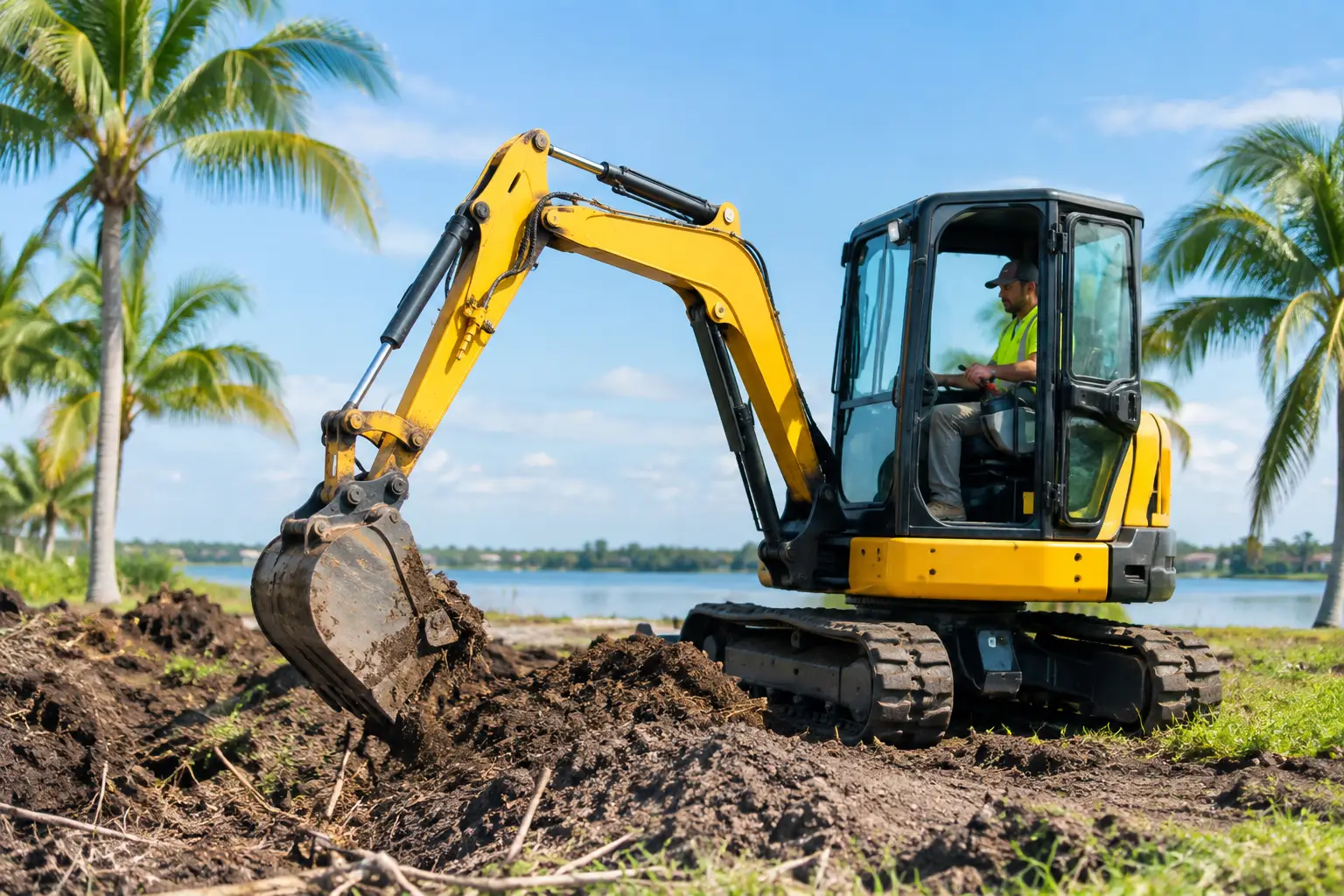
A crew waiting on an open trench, a tight residential side yard, and a trailer that has to move before daylight all put real limits on equipment choice. Mini excavators earn their place by putting controlled digging power where larger machines cannot work efficiently. For Florida contractors, utility crews, landscapers, and site-development teams, the right compact excavator can reduce hand labor, protect finished surfaces, and keep work moving through confined jobsites.
The best machine is not automatically the biggest one on the lot. It is the excavator that reaches the required depth, lifts the materials at hand, fits the access route, and gives the operator room to work safely all day. Those requirements change from one job to the next, which is why machine selection should start with the work rather than a single horsepower or operating-weight number.
Match Mini Excavators to the Work Ahead
Start with the core task. A contractor digging shallow utility runs in established neighborhoods may prioritize compact dimensions, trailer-friendly weight, and minimal tailswing. A site crew handling drainage structures, loading spoil, and trenching across a larger footprint may need more reach, lift capacity, and stability. Both jobs call for compact equipment, but not necessarily the same machine.
Before comparing models, identify the trench depth, expected soil conditions, access width, material weights, and daily production target. Also consider where spoil will go. A machine may have enough digging depth for the trench but lack the dump height or reach needed to load the trucks or dumpers already assigned to the job.
Florida ground conditions make this planning especially practical. Sandy material can move quickly, while wet ground, hard-packed areas, roots, broken concrete, and buried debris can slow a lighter machine. The goal is to choose enough excavator to maintain productive cycle times without bringing more size and transport cost than the site can support.
Working envelope matters as much as dig depth
Dig depth is an essential number, but it does not tell the entire story. Maximum reach at ground level affects how often the machine must be repositioned. Dump height affects loading efficiency. Bucket breakout force and dipper force influence how the machine performs in tougher material. Swing speed and hydraulic response affect cycle times when the operator is repeatedly digging, swinging, and placing spoil.
Look at those specifications together. A machine that barely reaches the bottom of the trench may work, but it can leave the operator working at the edge of its range for much of the day. A properly sized excavator gives the crew working room and helps maintain cleaner, more predictable production.
Choose the Right Tailswing Configuration
Tailswing is one of the fastest ways to narrow the field. Zero-tailswing mini excavators are built for work close to walls, fences, traffic lanes, foundations, and landscaping. With the upper structure staying largely within the track width as it rotates, the operator can swing with less risk of striking a nearby obstacle.
That advantage is valuable on utility repairs, residential drainage work, pool access, interior demolition, and urban construction. It can also make a difference when a spotter is managing a congested work area where every foot matters.
Conventional-tailswing machines can be a strong fit when the jobsite has more open space and stability is a priority. The counterweight extends beyond the tracks during rotation, so crews need to plan for swing clearance. In return, the configuration may suit work that benefits from a more substantial operating platform. Neither design is universally better. The right choice depends on the space around the machine and the demands placed on it.
Size, Transport, and Site Access
Operating weight affects more than digging performance. It influences trailer selection, tow vehicle requirements, ground pressure, access across finished areas, and the ability to work around sensitive utilities or landscaped surfaces. Smaller machines are easier to transport and can access areas that shut out larger equipment. Larger compact excavators bring more reach, lift, and trenching capability for heavier daily workloads.
The JCB compact range gives buyers room to match machine size to the job. At the smaller end, the 3,649-pound 18Z-1 is designed for tight access and compact work zones. At the upper end, the 21,385-pound 100C-2 gives crews a much larger compact excavator platform for demanding excavation, grading, and material-handling work.
That range matters because a first-time owner-operator and a fleet manager do not always have the same priority. An owner-operator may need a machine that can be towed efficiently between small jobs and still handle trenching, drainage, and light demolition. A contractor with recurring commercial work may justify a larger machine that reduces cycle times and handles more substantial attachments.
Do not treat transport as an afterthought. Confirm the total hauled weight, including the machine, bucket, attachment, trailer, fuel, and required securement equipment. A productive excavator only helps when it can arrive on the job safely and legally.
Attachments Turn One Machine Into More Capability
A bucket is only the beginning. With the proper hydraulic setup and attachment match, a compact excavator can trench, grade, break concrete, handle material, clear debris, and complete cleanup work without bringing another machine to the site. That flexibility can improve utilization, especially for contractors whose workload changes week to week.
Match the attachment to the work and the machine’s hydraulic capability. A hydraulic breaker that is too large can compromise performance and add unnecessary wear. A grading bucket may improve finish work, while a narrow trenching bucket reduces excavation volume around utility lines. Couplers can save time when attachments change often, but they should be selected with operator training and secure connection procedures in mind.
For demolition and material handling, lift charts deserve close attention. Rated lift capacity changes with boom position, reach, and machine orientation. Operators should not rely on a single maximum-capacity figure when lifting structures, pipe, pallets, or debris boxes. Proper rigging, stable ground, and a clear exclusion area remain part of the job.
Operator Comfort Protects Productivity
Compact does not have to mean cramped. The operator spends long hours controlling every trench line, grade pass, and loading cycle, so visibility, seat support, control layout, heat management, and low-effort hydraulics affect real production. A comfortable operator is better positioned to work accurately and identify changing site conditions before they become a problem.
Good visibility is especially valuable around crews, structures, and utilities. Keep windows and mirrors clean, use a spotter when the work area calls for one, and establish clear communication before digging begins. Safety features support the operator, but disciplined jobsite procedures still carry the work.
Electric excavators may also deserve consideration for specific applications. They can be a practical choice where indoor work, emissions restrictions, lower noise, or sensitive environments shape the job. The trade-off is that buyers need to plan charging, duty cycles, and jobsite power access with the same care they would give fuel logistics for a diesel machine.
New or Used: Buy for Uptime
New equipment gives buyers the benefit of current features, known machine history, and a clean starting point for planned maintenance. Used mini excavators can provide a strong value when the machine has been inspected carefully and its condition aligns with the workload. The better choice depends on utilization, cash flow, fleet needs, and how much downtime the operation can absorb.
When evaluating a used excavator, inspect track condition, pins and bushings, hydraulic cylinders, hoses, attachment couplers, swing bearing performance, and signs of leaks or irregular operation. Run the machine through its functions. Listen for unusual noise, check control response, and review maintenance history when available. A lower purchase price can disappear quickly if a machine needs major undercarriage or hydraulic work shortly after delivery.
Financing can help place a better-fit machine into service while preserving working capital for payroll, materials, and other job costs. The useful question is not simply what the monthly payment will be. It is whether the excavator’s production, reliability, and utilization will support that payment across the work already scheduled.
A compact excavator should make the next job easier to bid, mobilize, and complete. Bring the job dimensions, target dig depth, attachment needs, and transport limits into the equipment discussion. BRIGGS | JCB can help turn those field requirements into a machine choice that is ready to work when the crew is.