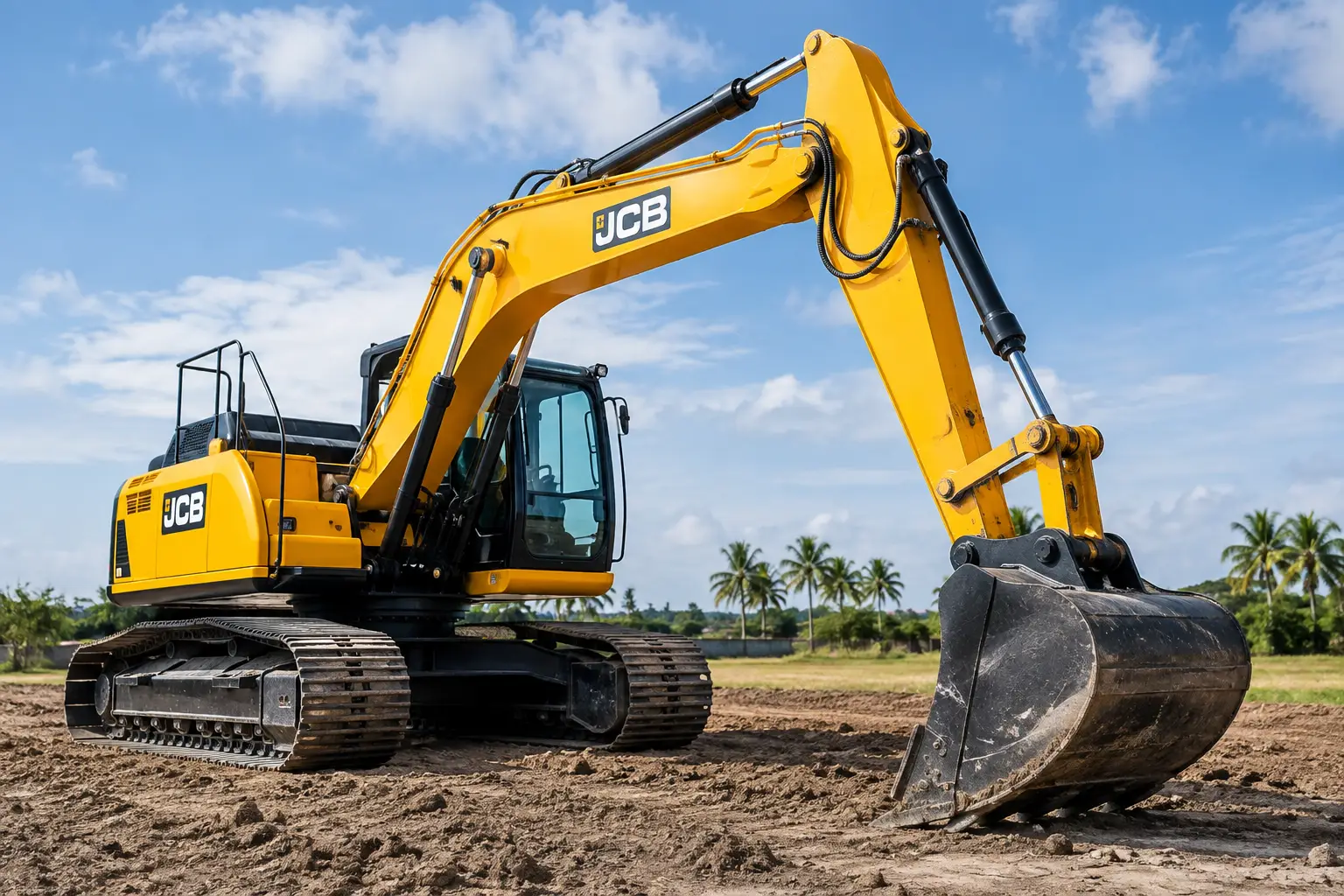
A compact excavator that is too large for a residential gate, too light for the attachment work, or too difficult to transport can cost a crew hours before the first bucket hits the ground. JCB excavators Florida contractors choose need to do more than dig. They need to fit the access route, match the soil and scope, travel reliably between jobs, and keep operators productive through a full shift in heat, rain, and tight working conditions.
For contractors across Jacksonville and the broader Florida market, the right machine starts with the work in front of it. A utility crew opening narrow service trenches has different priorities than a site contractor handling drainage, demolition, and finish grading. The best purchase is not automatically the largest excavator available. It is the machine with the reach, weight, tailswing design, hydraulic capability, and transport plan that fits the jobs your crew performs most often.
Choosing JCB Excavators in Florida by Job Requirements
Start with the constraint that affects production first. On many Florida jobsites, that is access. A machine may have the digging depth and bucket capacity you want, but it still has to pass through gates, work beside foundations, and operate without blocking traffic or damaging finished surfaces. Compact dimensions and a controlled working envelope matter when crews are trenching around homes, repairing utilities, or building out commercial sites with limited room to stage equipment.
Operating weight is the next practical measure. Smaller machines are easier to haul and can reduce ground disturbance, making them a strong fit for landscaping, light utility work, small demolition, and residential projects. Larger compact excavators bring more stability, breakout force, reach, and lifting capability for heavier trench boxes, drainage materials, rock, and recurring production work. That added capability can pay for itself on the right jobs, but it also changes trailer, towing, access, and ground-condition requirements.
The JCB compact excavator range gives buyers room to match those needs. At the lighter end, the 18Z-1 has an operating weight of 3,649 pounds for crews that need a highly transportable machine in confined areas. At the upper end, the 100C-2 reaches 21,385 pounds and is built for contractors whose work calls for more substantial digging and material-handling performance. Between those points are multiple machine sizes for contractors who need a better balance of access and production.
Digging depth and reach affect more than trench work
Dig depth is usually the first specification buyers compare, especially for utility, irrigation, drainage, and septic work. It should be matched to the deepest routine excavation, not the occasional outlier job. Buying too close to the minimum can force the operator to reposition repeatedly or leave the machine working at the edge of its usable range.
Reach and dump height deserve the same attention. A machine working on stormwater improvements may need enough reach to place spoil farther from the trench edge. A contractor loading debris or material into trucks needs a dump height that works with the hauling setup already in the fleet. These details influence cycle times all day, every day.
Zero Tailswing or Conventional Tailswing?
Tailswing configuration is a jobsite decision, not a brochure preference. Zero-tailswing excavators are designed to keep the rear of the machine within or close to the track width while rotating. That makes them a strong choice for roadside utility work, backyard construction, fence-line trenching, and projects where the operator is working close to structures, vehicles, or active pedestrian areas.
The benefit is straightforward: less rear overhang reduces the risk of striking an obstacle when swinging. It also gives the operator more confidence in confined spaces, where every repositioning move takes time and creates another chance for contact damage.
Conventional-tailswing models can still be the right answer when the site provides room to work. Their configuration may suit buyers who prioritize stability and have open excavation areas, larger development sites, agricultural properties, or demolition zones with a clear swing radius. The trade-off is simple. More working room can support a larger machine footprint, but that same machine may become less useful on tightly packed jobs.
Before choosing either configuration, walk through a typical job mentally. Consider the gate opening, trailer approach, street-side setup, building corners, spoil-pile location, and the area needed to swing and load. A machine that works efficiently in the real site layout will usually outperform a larger unit that spends the day maneuvering around its own limitations.
Match the Excavator to the Work You Sell
For residential contractors and landscapers, compact size, clean access, and towability often carry as much weight as maximum digging performance. A smaller zero-tailswing machine can handle footings, drainage corrections, stump removal, light grading, and irrigation while minimizing disruption to lawns, drives, and neighboring structures. The right attachment setup can expand that machine’s role without adding another piece of iron to the trailer.
Utility and municipal crews often need a different balance. Trenching depth, hydraulic performance, lifting capacity, visibility, and safe operation near traffic or existing services become central concerns. A machine that can move confidently through narrow rights-of-way while delivering consistent digging performance helps crews stay on schedule when conditions change from one service call to the next.
Site-development and excavation contractors typically benefit from stepping up in operating weight when production demands are consistent. Larger compact excavators can support heavier buckets, more material movement, deeper excavation, and stronger performance in tougher ground. They are also better suited to work where the excavator spends much of the day loading, handling pipe or structures, and moving between multiple tasks on the same site.
Agricultural operators should look at the full range of seasonal tasks. Ditch maintenance, drainage work, fence-line clearing, feed-area improvements, and material handling may call for a machine that can travel around a property and work on variable ground. Here, durability, service access, operator comfort, and the ability to use productive attachments often matter as much as a single digging specification.
Consider Electric Excavator Options for Sensitive Sites
Electric compact excavators can make sense where emissions, noise, or indoor operation are major job constraints. Facilities work, enclosed environments, municipal projects, and noise-sensitive properties may benefit from an electric configuration. The lower-noise operating profile can also improve communication around the machine and reduce disruption near occupied buildings.
That does not mean electric is the automatic choice for every fleet. Buyers should consider charging access, daily runtime, travel distance, attachment demand, and whether the machine will work primarily at one location or move constantly between jobs. For a crew with predictable work and reliable charging, electric can be a practical operating solution. For a crew that runs long, remote shifts with no charging plan, a conventional powertrain may remain the better fit.
New or Used: Buy for Uptime, Not Just Purchase Price
A used excavator can be a smart route for an owner-operator adding capacity, a rental operation broadening its fleet, or a contractor replacing an older unit without taking on the cost of a new machine. The value depends on condition, maintenance history, hours, undercarriage wear, hydraulic response, attachment compatibility, and the work the machine will be asked to perform next.
New equipment offers the advantage of starting with current specifications, known condition, and a machine selected specifically for your work. That can be especially valuable when a crew depends on one excavator for daily production. If downtime puts a project behind schedule or sends labor home, the real cost of a cheaper purchase can become clear quickly.
Financing should be part of the equipment conversation early, not after the machine is selected. The monthly payment needs to fit the machine’s expected billable use, while leaving room for transportation, attachments, insurance, maintenance, and the rest of the operating plan. A properly sized excavator that stays busy is usually a better business decision than an oversized machine sitting between occasional heavy jobs.
Build a Purchase Around the Entire Jobsite
An excavator rarely works alone. Think through the bucket selection, coupler needs, breaker or auger requirements, trailer capacity, towing vehicle, and complementary compact equipment before making a final decision. A strong machine-and-attachment combination can reduce hand labor, eliminate subcontracted steps, and keep the crew moving from excavation to cleanup without waiting on another piece of equipment.
BRIGGS | JCB can help Florida buyers compare new and used JCB compact excavators against the digging, access, transport, and production demands of their operation. Bring the details of your typical trench, site layout, hauling setup, and attachment needs to the conversation. The right machine should earn its place on the job from the first loadout through the last cleanup pass.