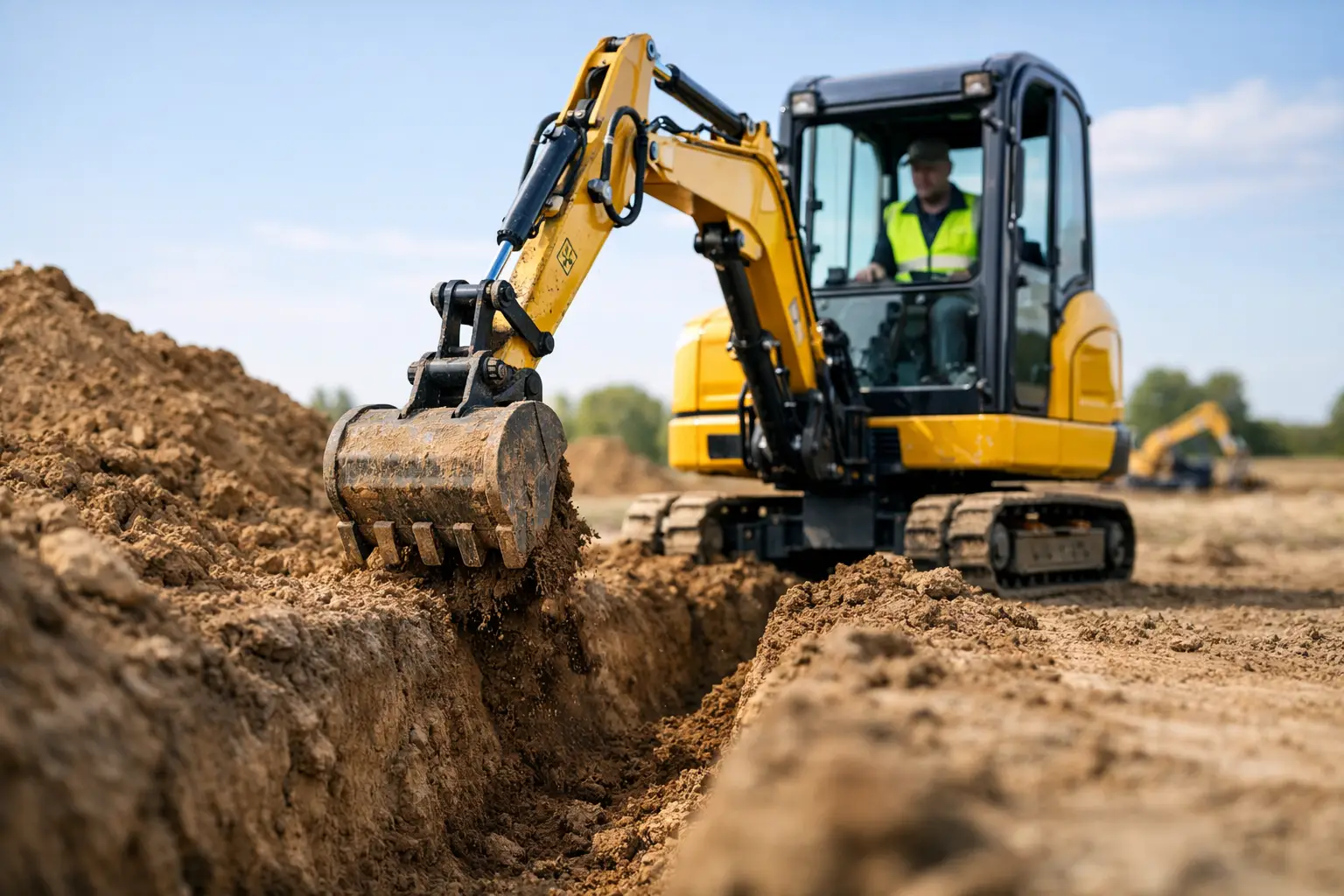
A trench that is 36 inches wide and 6 feet deep does not need the same machine as a utility run that crosses a tight backyard, a new subdivision, or a commercial site with heavy spoil piles. The best mini excavator for trenching is the one that reaches the required depth, works safely inside the available space, and keeps production moving without adding unnecessary transport or operating cost.
For Florida contractors, trenching also brings site-specific variables: sandy soils that move quickly, wet ground that can challenge stability, established landscaping, utility congestion, and access routes that may be narrower than the trench itself. Selecting by horsepower alone can leave a crew with the wrong machine when it is time to swing, load trucks, or maintain line and grade.
Start With the Trench, Not the Machine
Before comparing excavator models, define the work the machine must perform most often. Record the trench depth, required bottom width, expected run length, material type, and whether the excavator will install pipe, set structures, backfill, or simply excavate. Those details determine the working envelope and attachment package that matter on the job.
Digging depth is the first hard limit. A machine may handle shallow drainage, landscape irrigation, and electrical conduit with room to spare, yet come up short on deeper utility trenches. Do not select a unit based on maximum depth alone. Allow a practical margin so the boom and arm can work efficiently at the required depth instead of operating at the end of their range through the entire run.
Reach matters as well. Adequate reach lets the operator place spoil where it will not cave back into the trench, interfere with traffic, or force repeated machine repositioning. On a narrow residential lot, that may mean managing spoil close to the machine. On a larger site, it may mean reaching over an open trench or loading into a dumper without blocking the work zone.
Bucket width should follow the pipe, box, or utility installation requirement. A narrow bucket reduces excavation volume and backfill demand, but it can limit production when the trench must accommodate multiple lines or safe working clearance. Match the bucket to the finished trench specification, not just the smallest bucket available.
Choose the Right Operating Weight Class
Operating weight affects digging force, lift capacity, stability, ground impact, and transport planning. Smaller mini excavators are often the right call for irrigation crews, repair contractors, homeowners’ associations, and work behind existing structures. They are easier to position through gates and tight access points, and a lighter trailer package can simplify mobilization.
That convenience has a trade-off. A lighter machine may take more time in compacted material, handle less spoil per bucket, and offer less stability when the trench is deep or the boom is working across the side of the tracks. For recurring utility, drainage, and site-development work, moving into a larger compact class can produce more footage per day and give the operator a stronger platform for lifting pipe, structures, and trench support materials.
JCB’s compact excavator range extends from the 3,649-pound 18Z-1 to the 21,385-pound 100C-2. That range gives buyers room to match a machine to light access-sensitive trenching or heavier production excavation without moving into a full-size excavator category. The right place in that range depends on the job mix, not the biggest trench on the calendar.
A good purchasing question is this: what work will fill most of the machine’s hours? If 80 percent of the work is shallow service trenching in restricted areas, a compact zero-tailswing model may earn its keep faster than a larger unit. If the machine will repeatedly trench deep, load haul trucks, and handle heavier material, extra operating weight and digging performance are usually worth the larger transport package.
Best Mini Excavator for Trenching in Tight Areas
Tailswing configuration can decide whether a machine is productive or constantly waiting for spotters and repositioning. Zero-tailswing excavators keep the upper structure within, or close to within, the track width during rotation. That is a major advantage beside buildings, fences, traffic lanes, landscape features, and occupied structures.
For trenching along a property line or inside a developed site, zero tailswing helps the operator swing spoil and backfill while reducing the chance of contacting an obstruction. It also helps crews maintain a smaller exclusion area around the machine. This does not eliminate the need for a clear swing plan, but it gives the operator more usable room where every foot counts.
Conventional-tailswing machines can still be a strong choice on open sites. Their layout may suit buyers who prioritize performance in less confined work areas and have room to manage the counterweight. The trade-off is straightforward: more rear swing clearance is required, especially when trenching parallel to a wall, roadway, or parked equipment.
Track width and overall transport dimensions deserve the same attention. A compact machine that can physically reach the work area is more valuable than a larger machine that must stop at the curb while crews finish the trench by hand. Measure gates, side yards, bridge crossings, trailer routes, and the tightest turn before committing to a machine size.
Do Not Overlook Hydraulics and Attachments
A trenching excavator is rarely a bucket-only machine for its entire service life. Auxiliary hydraulics expand its value for breakers, augers, compactors, grapples, and specialty tools. For utility work, an auger may speed installation of posts or service holes, while a hydraulic breaker can handle concrete, rock, or damaged pavement encountered along a trench line.
Attachment performance depends on hydraulic flow, pressure, coupler compatibility, and the machine’s ability to control the attachment accurately. Ask about the hydraulic configuration needed for the tools your crew already owns or expects to add. Retrofitting later can cost more than selecting the correct setup at purchase.
A quick coupler can also reduce downtime when work changes from trenching to loading, grading, or demolition. The value is not simply faster bucket changes. It is keeping the excavator on the job while the crew handles more tasks with one compact platform. Confirm that the coupler and attachment arrangement preserve the breakout force, reach, and visibility needed for your usual trench work.
Match Comfort and Visibility to Production Hours
Trenching is precision work. The operator needs a clear view of the bucket, trench edge, spoil pile, nearby personnel, and underground utility markings. Good visibility supports cleaner trench walls, fewer corrections, and more controlled movements around obstacles.
Operator comfort is also a production issue, particularly on long utility runs. A comfortable seat, practical controls, climate protection where equipped, and a workable cab or canopy layout help the operator stay focused through a full shift. Fatigue shows up in slower cycle times, rougher grade control, and unnecessary wear on the machine.
Look at daily service access before buying. Grease points, fluid checks, filters, and cleanout areas should be easy for your crew to reach. A mini excavator that is simple to inspect is more likely to receive the routine attention that protects uptime. On a working fleet, the best features are often the ones that prevent a small maintenance task from becoming a lost day.
Plan Transport, Ground Conditions, and Support
Towability should be evaluated as a complete package: machine, buckets, attachments, trailer, tie-down equipment, and towing vehicle. A machine that fits your current truck and trailer may reduce mobilization cost and allow faster response for small service jobs. If a larger excavator requires different hauling arrangements, account for that cost in the production calculation.
Florida ground conditions deserve a realistic look. Soft shoulders, wet lots, sand, and recently disturbed fill can change how a machine performs and where it can safely sit while digging. Operating weight can improve stability, but it can also increase ground pressure and recovery difficulty in poor conditions. Track selection, travel route planning, and spoil placement all affect whether trenching stays productive.
For buyers comparing new and used equipment, inspect more than appearance. Review maintenance history, hydraulic response, undercarriage condition, bucket and coupler wear, cylinder condition, and controls. A used machine with documented care can be a practical fleet addition, while a low purchase price can disappear quickly if the excavator needs immediate undercarriage or hydraulic work.
The right trenching machine should fit the work your crew performs week after week, not just the largest specification on a brochure. Bring your typical trench depth, access measurements, attachment needs, and transport limits to BRIGGS | JCB, then compare the machine from the operator’s seat and against the conditions waiting at your next jobsite.