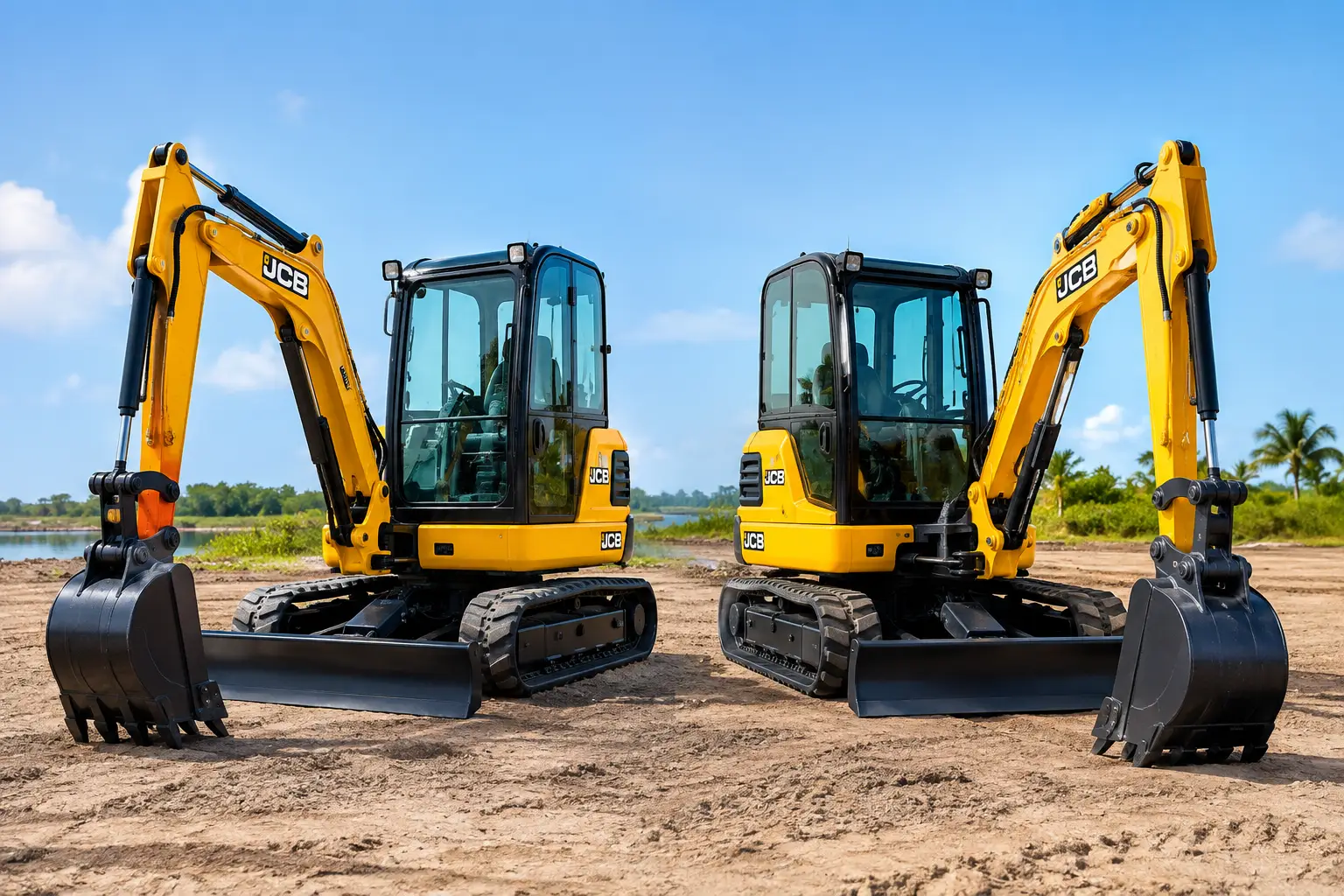
A one-ton difference can change how a mini excavator works for your crew. In a JCB 48Z-1 versus 55Z-1 decision, both machines bring zero-tailswing access and serious capability to congested jobsites. The better purchase comes down to the work at the end of the bucket: how deep you dig, how often you lift, where you transport, and how tight the working envelope really is.
For contractors around Jacksonville and across Florida, these are practical production machines. They are sized for utility trenching, drainage, site preparation, residential construction, landscaping, demolition support, and municipal work. Both can work where larger excavators lose access, but the 55Z-1 gives a crew more reach and lifting capability when the job regularly pushes beyond light-duty compact work.
JCB 48Z-1 versus 55Z-1: the working difference
The JCB 48Z-1 sits in the roughly 4.8-ton class, while the 55Z-1 moves into the approximately 5.5-ton class. That distinction sounds modest on paper, but it affects stability, excavation performance, trailer requirements, and the confidence an operator feels when handling pipe, concrete sections, pallets, or full buckets at reach.
Both excavators use a zero-tailswing design. The counterweight stays within the track width as the upper structure rotates, reducing the chance of clipping walls, traffic barriers, trees, parked vehicles, or other equipment. For crews working along established homes, roadways, utilities, and finished landscaping, that is more than a convenience. It helps keep the machine productive without constantly stopping to reposition.
The 48Z-1 is the more compact and lighter choice. It is built for operators who need a capable excavator that can get through restricted access and move efficiently between smaller jobs. The 55Z-1 retains that zero-tailswing advantage while adding the size needed for deeper excavations, higher dump positions, and more demanding material-handling work.
Neither machine is automatically the right answer simply because it is bigger or easier to transport. A crew digging shallow service trenches all week may see stronger overall value from the 48Z-1. A contractor routinely installing deeper utilities or loading trucks from a stockpile may recover the additional investment in the 55Z-1 through fewer cycles and less machine repositioning.
Where the 48Z-1 earns its place
The 48Z-1 is a strong fit when site access and transport efficiency are central to the job. It is substantial enough to take on commercial-grade trenching and excavation while remaining easier to deploy than a heavier machine. For an owner-operator, that can mean less time spent arranging transport and more time working billable hours.
This model makes sense for residential builders, irrigation and utility contractors, landscapers, and maintenance crews that work around existing improvements. Think backyards with gates, active multifamily properties, pool excavations, drainage corrections, small foundations, and repair work where the machine needs to fit into a narrow operating area without sacrificing useful digging power.
Its lighter operating weight can also be an advantage on finished surfaces and sensitive ground conditions. That does not eliminate the need for mats, proper access planning, or ground-pressure awareness, especially in Florida’s wet conditions. It does give crews another option when a larger excavator would create unnecessary site disturbance.
The 48Z-1 is not a light-duty machine, but it is best matched to work where agility has a direct value. If your operator regularly works beside structures or transitions between compact sites, the zero-tailswing profile and manageable size support faster, more confident machine placement.
Transport planning matters
Before choosing the 48Z-1 because it is the lighter machine, look at the complete transport package. Include the machine, bucket, coupler, hydraulic attachments, trailer weight, tie-down equipment, and fuel. The right truck-and-trailer setup protects your schedule, supports legal hauling, and prevents a supposedly compact purchase from becoming a logistics issue.
If the 48Z-1 lets your existing transport setup serve more jobs without compromise, that is a meaningful operating advantage. If you already own the truck and trailer required for a heavier excavator, transport may not be the deciding factor at all.
When the 55Z-1 is worth the added size
The 55Z-1 is for crews that need more production without stepping out of the zero-tailswing category. Its additional operating weight improves stability, particularly when digging at reach or handling heavier materials. It also provides the reach and digging depth that matter when utility specifications, grade plans, or foundation details demand more than a compact residential trench.
For site-development contractors, utility crews, municipalities, and rental operations, that extra capacity can make the 55Z-1 the more versatile fleet machine. It can still work in restricted areas, but it brings greater authority to tougher assignments: deeper trench runs, larger drainage structures, loading trucks, demolition cleanup, and repeated lifting tasks.
The added size is especially valuable when a machine will spend most of its life moving dirt rather than simply fitting through access points. A 55Z-1 can reduce the number of repositioning moves on larger cuts and help operators place spoil farther from the trench. Those small gains add up across a long utility installation or a multi-day grading project.
There are trade-offs. The 55Z-1 requires more attention to hauling, staging space, and ground conditions. It may be more excavator than necessary for confined landscape work or quick service calls. Choosing it for occasional heavy work can be smart, but only if that work is frequent enough to justify carrying the larger machine every day.
Compare the work tool, not just the base machine
A mini excavator’s productivity changes significantly with the attachments it carries. Bucket width, coupler type, auxiliary hydraulic requirements, and attachment weight all influence cycle times and lifting performance. A grading bucket helps finish work move faster, while a hydraulic breaker, auger, thumb, or compaction attachment can turn the same excavator into a more complete site solution.
When comparing these two models, consider the attachment you will use most often. A contractor trenching for water lines may prioritize a narrow bucket, hydraulic thumb, and stable handling of pipe or bedding materials. A land-clearing or demolition-support crew may care more about thumb performance, guarding, and the ability to sort debris efficiently.
The 55Z-1’s greater size can provide an edge with heavier attachments and material handling. The 48Z-1 may be the better match when the attachments must be hauled frequently and the job requires careful maneuvering around finished property. Ask for machine-specific lifting and hydraulic information based on the boom, arm, bucket, coupler, and attachment configuration you intend to run.
Operator comfort affects daily output
The productive difference between these machines is not limited to digging figures. Operators need clear visibility, predictable controls, a comfortable seat, and a cab or canopy configuration suited to the job. An operator who can work accurately through a full shift is less likely to waste time correcting grades, striking obstacles, or making repeated cleanup passes.
Zero tailswing also supports safer operation in congested areas, but it does not replace a jobsite plan. Establish the swing area, manage ground personnel, identify overhead and underground hazards, and account for changing conditions after rain. Florida soils can shift quickly from firm ground to soft, saturated areas, especially near drainage routes and retention features.
For fleet managers, standardizing on a familiar control layout and attachment approach can make either machine more productive. For first-time buyers, a machine walkaround and hands-on operating evaluation can reveal whether the compact feel of the 48Z-1 or the added working mass of the 55Z-1 better suits the crew.
Make the purchase around your normal job, not the exception
Choose the 48Z-1 when access, efficient transport, and maneuverability drive most of your work. It is a capable zero-tailswing excavator for contractors who need real excavation performance in compact spaces.
Choose the 55Z-1 when deeper digging, added lift capacity, and higher daily production are regular requirements. It gives you a stronger platform for utility, site, and material-handling work without giving up the close-quarter benefits of zero tailswing.
The best next step is to bring a recent job plan, your typical trench depth, the attachments you use, and your transport details to BRIGGS | JCB. Matching the excavator to the work you perform most often will do more for uptime and jobsite output than buying extra machine for a task that only appears once in a while.