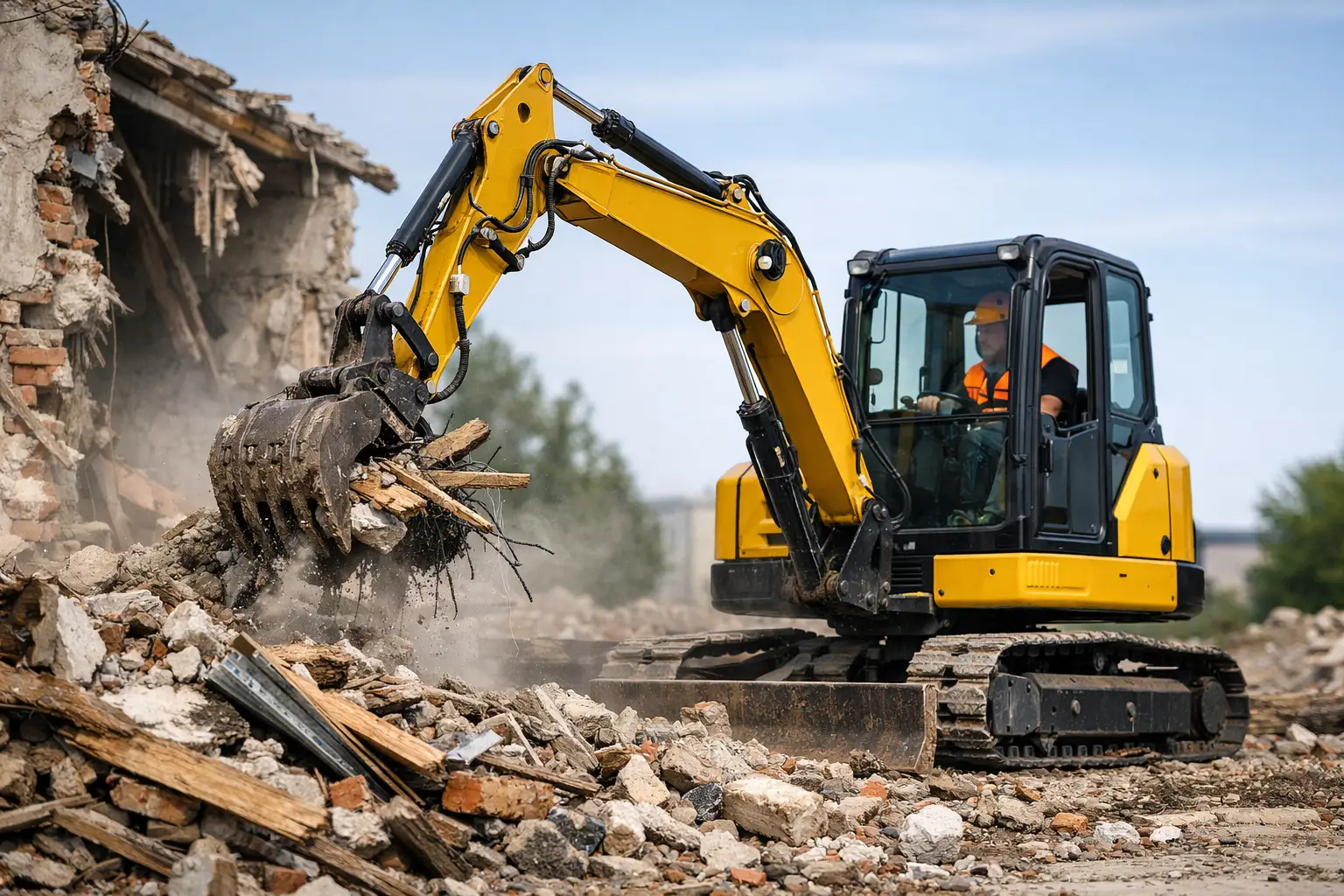
A mini excavator for demolition work has to do more than fit through a gate. It needs enough hydraulic power to run a breaker or grapple, enough stability to work safely around debris, and enough reach to keep the operator productive without constantly repositioning. The right machine turns selective teardown, concrete removal, interior demolition, and cleanup into controlled operations instead of labor-heavy bottlenecks.
For Florida contractors, machine selection often comes down to the site. A residential backyard, a tight commercial pad, a utility repair area, and a concrete demolition job each place different demands on operating weight, tailswing, attachment flow, and transport. Matching those requirements before the machine arrives helps protect productivity, crews, and project margins.
Start With the Demolition Scope
Demolition is not one task. Removing a wood-frame structure calls for different machine capabilities than breaking a slab, pulling footings, sorting material, or taking down masonry near an occupied building. Define what the excavator will handle most often, then size the machine and attachments around that work.
A compact excavator in the 3,500- to 8,000-pound range can be a productive choice for light interior work, landscaping demolition, small slabs, fencing, shallow foundations, and cleanup. These machines are easier to transport and can access restrictive sites where a larger excavator cannot operate.
When the work involves thicker concrete, continuous breaker use, larger footings, heavier debris, or higher production targets, additional operating weight becomes valuable. A larger compact excavator can provide greater lifting capacity, hydraulic performance, reach, and stability. The trade-off is transport weight, footprint, and the space needed to work and swing safely.
Do not choose solely by the size of the debris pile. Consider the hardest repeated task. If the job requires a hydraulic hammer for most of the day, a machine that is merely adequate on paper can lose time through slow breaking performance, excessive movement, and attachment limitations.
Match Machine Weight to Breaker and Grapple Work
Operating weight is a major factor in demolition performance. A heavier mini excavator generally offers a more stable platform for hydraulic attachments and material handling. That stability matters when breaking concrete, lifting uneven debris, or loading trucks from an irregular pile.
For hammer work, the excavator and breaker must be properly matched. An oversized breaker can place unnecessary stress on the machine, while an undersized breaker can limit production on reinforced concrete or substantial footings. Attachment manufacturers provide machine weight and hydraulic-flow ranges for a reason. Follow them.
Grapples also require careful matching. A demolition grapple needs enough closing force and capacity to handle framing, concrete chunks, brush, pipe, and mixed debris without overloading the excavator. Keep lift capacity in mind at the actual working radius, not only close to the machine. A load that feels manageable near the tracks may be beyond the safe limit when the boom is extended or the house is on a slope.
Counterweight, track width, and undercarriage design contribute to stability as well. For repetitive demolition work, a machine that stays planted lets the operator work with more precision and less fatigue.
Hydraulic Performance Drives Attachment Productivity
Auxiliary hydraulics determine how effectively a mini excavator runs attachments. Breakers, grapples, compactors, crushers, shears, and rotating tools all have specific flow and pressure requirements. Before purchasing or assigning a machine, compare its auxiliary hydraulic specifications with the attachment requirements.
High-flow capability is not necessary for every job, but it can make a measurable difference with demanding attachments. A contractor performing occasional slab removal may prioritize a standard auxiliary circuit and a properly sized breaker. A contractor handling frequent demolition, sorting, and attachment changes may benefit from more hydraulic capacity and dedicated attachment controls.
Also look at how easily the operator can manage the attachment. Controls should be accessible and predictable, especially when working close to structures, utilities, or spotters. A thumb or grapple that responds smoothly is safer and faster than one that requires constant correction.
Attachment versatility can make one excavator useful across several phases of the job. A practical demolition setup may include:
- A hydraulic breaker for slabs, footings, curbs, and masonry
- A hydraulic thumb or grapple for separating, loading, and sorting debris
- A trenching or cleanup bucket for loose material and final grade work
- A compaction wheel or plate compactor for repair work after removal
The goal is not to carry every attachment available. It is to equip the machine for the tasks that repeatedly consume labor hours on your jobsites.
Tailswing and Access Matter on Tight Sites
Many demolition projects happen where space is limited. There may be fences, neighboring structures, parked vehicles, utility lines, sidewalks, or active crews working nearby. In these conditions, tailswing configuration deserves as much attention as dig depth or horsepower.
A zero-tailswing mini excavator keeps the rear counterweight within the track width or close to it as the house rotates. That design is well suited to confined areas, interior demolition, urban work, and jobs where swing clearance is limited. It reduces the risk of striking obstructions behind the machine and can keep production moving in narrow spaces.
A conventional-tailswing machine can offer strong stability and may be a good fit where the work area is open enough to accommodate it. If the demolition zone has room to swing and the job calls for repeated lifting or breaker work, that extra operating presence may be worthwhile. Neither configuration is automatically better. The best choice depends on access, swing clearance, and the attachment work planned.
Measure gates, alleys, building openings, and trailer access before selecting the machine. A compact excavator that cannot reach the work area is not a compact solution.
Protect the Operator and the Work Area
Demolition creates hazards that are less predictable than ordinary excavation. Falling debris, exposed steel, unstable walls, dust, buried utilities, and uneven ground require a disciplined operating plan. The excavator should support that plan with good visibility, durable guarding where needed, stable footing, and an operator station designed for long shifts.
Cab comfort is directly tied to production. A supportive seat, effective climate control, clear sightlines, and low-effort controls help an operator stay focused during repetitive breaker or sorting work. In Florida heat and humidity, an enclosed, air-conditioned cab can be a practical requirement for sustained output rather than a luxury.
Before work begins, establish an exclusion zone around the demolition area. Keep ground personnel out of the excavator’s swing radius and away from suspended or unstable material. Identify utilities, evaluate the structure’s condition, and use a spotter when visibility is restricted. Operators should never use the boom or attachment to pull structures without a plan for where the material will fall.
Dust management is another operational concern. Water suppression, proper debris handling, and controlled breaking practices can improve visibility and reduce cleanup around the site.
Consider Transport, Fuel, and Fleet Fit
A smaller excavator may save time and cost between jobs because it can often be moved with a more manageable truck-and-trailer combination. That advantage matters for owner-operators and crews completing several small projects each week. Larger compact machines may deliver more demolition output, but they can require heavier transport equipment and more planning.
Fuel use should be evaluated against production, not considered by itself. A machine that burns slightly more fuel but completes breaker work faster and handles larger loads may reduce total job cost. Electric compact excavators can also make sense for specific indoor, low-noise, or emissions-sensitive environments, provided charging logistics and duty cycle align with the work.
For fleets, standardizing around a few machine sizes can simplify attachment compatibility, operator training, maintenance planning, and parts support. For a first-time buyer, the better choice is often the machine that covers the majority of current work while leaving room for the next level of projects.
Choose a Machine Built for the Jobs Ahead
The best mini excavator for demolition work is sized around the site, the material, and the attachment package, not just the purchase price. A compact model can be the right answer when access and towability drive the job. A heavier machine can earn its place when stability, reach, and breaker performance determine production.
BRIGGS | JCB can help contractors compare JCB compact excavator options by operating weight, tailswing configuration, hydraulic capability, digging performance, and transport requirements. Bring the details of the work you perform most often, including the attachment you plan to run. That conversation is where a productive demolition setup starts.