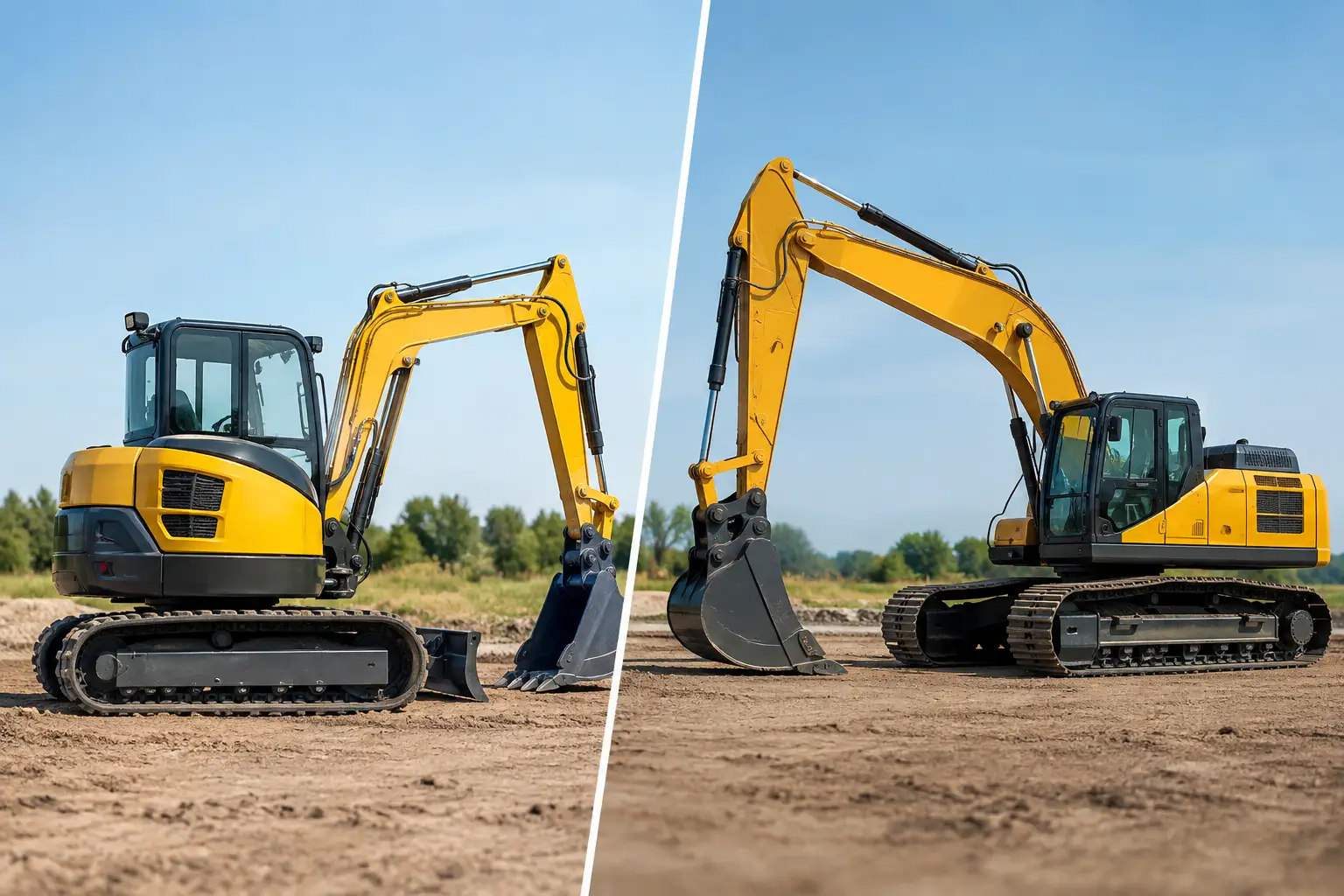
A machine that swings into a live traffic lane, a fence line, or a finished structure can slow a productive crew fast. The choice between reduced swing versus conventional excavators comes down to more than machine size. It affects where the operator can work, how the crew manages the site, and whether the excavator is matched to the actual production demands of the job.
For contractors working in Jacksonville and across Northeast Florida, confined lots are common. Utility corridors, residential side yards, road shoulders, drainage work, and commercial renovations often leave little room behind the machine. At the same time, open-site excavation, loading, and heavy trenching may call for the stability and working envelope that a conventional-tail excavator can provide. The right answer depends on the work, not just the available space.
Reduced Swing Versus Conventional Excavators: The Difference
A conventional excavator has a counterweight that extends well beyond the track width as the upper structure swings. This design has long been standard because the counterweight helps balance the boom, arm, bucket, and load. On an open jobsite, that rear overhang is rarely a concern. It can be an advantage when the machine is digging hard, lifting pipe, handling material, or reaching across a trench.
A reduced-swing excavator uses a more compact upper structure and counterweight arrangement to reduce rear overhang during rotation. The tail may still extend beyond the tracks, but by less than a conventional design. Zero-tailswing machines take the concept further, keeping the rear of the house within, or close to within, the track width through rotation.
Those labels matter when comparing machines. Reduced swing is not automatically zero tailswing, and neither configuration automatically makes one excavator better than another. Buyers should look at the actual tail-swing dimension, track width, operating weight, lift chart, and digging specifications for the model under consideration.
Where Reduced Swing Earns Its Keep
Reduced-swing excavators are built for sites where every foot of clearance matters. The operator can rotate the house with less risk of clipping walls, parked vehicles, temporary barriers, utility pedestals, or workers moving through the work zone. That is a practical safety benefit, especially when the jobsite cannot be fully closed off.
On a residential utility repair, for example, a compact reduced-swing machine can work alongside a house or inside a narrow easement without requiring the crew to clear a larger swing radius. In a street-side trench, it can keep more of the machine within the work area while trucks, traffic control, and other crews operate nearby. Landscaping contractors also benefit when digging around established trees, retaining walls, pools, and finished hardscape.
Less rear overhang can improve placement options. The excavator may be able to sit parallel to a structure instead of at an angle, allowing the operator to maintain a cleaner trench line and reducing the need to reposition. Fewer moves can save time, limit ground disturbance, and keep labor focused on production rather than spotter work.
This does not eliminate the need for a swing-clearance plan. Buckets, booms, attachments, and the upper structure still require room to operate. The operator must also account for track position, uneven ground, pedestrians, and the machine’s full working envelope. Reduced tail swing gives the crew more margin. It does not replace safe operating practices.
Why Conventional Tail Swing Still Has a Place
Conventional excavators remain a strong choice for jobs with room to work. Their counterweight design can support a stable platform for demanding excavation, lifting, loading, and attachment work. For contractors regularly moving dirt on new developments, cleaning ponds, digging wide drainage runs, or loading trucks in open areas, conventional tail swing may be the more productive fit.
The key benefit is not simply a bigger rear end. It is how the machine’s balance, geometry, and hydraulic performance work together. When the boom is extended, the bucket is loaded, or the operator is lifting material over the side, stability becomes a major part of productive operation. A properly sized conventional machine can give an operator confidence during repeated heavy cycles.
Conventional designs can also make sense for fleet standardization. If most work takes place on open commercial, agricultural, or site-development projects, choosing the configuration that best supports the bulk of the workload may be more valuable than optimizing for the occasional tight-access job.
That said, conventional tail swing requires discipline. The crew needs enough room around the machine to prevent counterweight contact. On constrained sites, this may mean a larger exclusion zone, additional spotter support, traffic control, or more frequent repositioning. Those costs should be considered along with the purchase price.
Compare the Specifications That Affect Production
Tailswing configuration should start the conversation, not end it. Two machines with similar operating weights can behave very differently based on their hydraulic system, undercarriage, boom configuration, and counterweight design. A buyer should compare the numbers that affect daily work.
First, confirm operating weight and transport requirements. A mini excavator that fits the job may still need to fit the trailer, tow vehicle rating, and local hauling plan. Compact machines can offer major access advantages, but towability should be verified with the machine, attachments, trailer, fuel, and required securement equipment included.
Next, look at maximum dig depth, reach at ground level, and dump height. A tight-space excavator is only productive if it can reach the trench depth, load the selected truck or dumper, and work efficiently from its available setup position. A machine that must be moved repeatedly to finish a trench loses some of the benefit gained from a compact swing profile.
Lift capacity deserves close attention when the work includes pipe, structures, boulders, vaults, or material handling. Review the lift chart at the expected radius and lift point, not just the largest number listed. Capacity changes with reach, height, blade position, and whether the load is lifted over the front or side of the machine.
Finally, consider operator environment and attachment needs. A comfortable, protected operator is better positioned to make accurate movements through a long shift. Auxiliary hydraulic requirements, coupler compatibility, cab or canopy configuration, blade function, and track type can all affect whether the machine earns its keep on your crew.
Match the Configuration to the Site Plan
A reduced-swing excavator is often the better call when site access is the limiting factor. Think occupied residential areas, narrow commercial lots, road work, utility installation, indoor demolition, or work next to structures. The compact rear profile helps the machine stay productive where a conventional unit may be restricted or require more site preparation.
A conventional excavator is often the better call when the job is open, the work is repetitive, and stability under digging or lifting loads is the priority. It can be a practical production machine for larger excavation scopes where the crew has room to establish a proper swing area.
There is also a middle ground. A contractor may need reduced swing for a significant share of work but still require enough digging force, lift capacity, and reach to handle daily production. In that case, the best choice is rarely the smallest machine that can enter the site. It is the machine that clears the site constraints while carrying the specifications needed to finish the work without compromise.
Questions to Settle Before You Buy
Before selecting a configuration, walk through the jobs that will drive the most machine hours. Measure the narrowest access point, the workable swing area, and the clearance beside structures. Identify the deepest common trench, the heaviest routine load, the truck or dumper height, and the attachments your crew will use.
Then consider what happens when conditions are less than ideal. Florida jobsites can bring soft ground, wet weather, limited staging space, and changing utility conditions. A machine with the right tail profile but insufficient capacity can create its own delays. A machine with excellent production capability but too much rear overhang can create safety and access problems before the first bucket goes in the ground.
BRIGGS | JCB can help contractors compare JCB compact excavator configurations by the measurements that matter in the field, from operating weight and dig depth to tailswing design and transport needs. Bring the site dimensions and typical workload into the conversation so the comparison reflects your actual operation.
The best excavator is the one that gives your operator room to work safely while still delivering the reach, power, and stability the job demands. Start with the tightest site your crew works regularly, then make sure the machine is built to carry the rest of the workload.